Creative Mind Map: Create the Best Visual Representation
Imagine a tool that transforms the rigid lines of linear thinking into a vibrant, engaging network of ideas that encourages active participation. A space where a single idea can sprout branches of association, burst into blooms of insight, and connect to other ideas across a landscape of your own making. It is the essence of the creative mind map. It is a visual tool that is far superior to a simple note-taking technique. This kind of map is a dynamic visual framework designed to harness the brain's natural inclination for radiant thinking. Thus, if you want to learn more about this type of map, see this article. We will also teach you how to create the best mind map using an excellent mind-mapping tool.

- Part 1. What is a Creative Mind Map
- Part 2. Factors for Making a Creative Mind Map
- Part 3. Best Tool for Creating a Creative Mind Map
- Part 4. FAQs about Creative Mind Map
Part 1. What is a Creative Mind Map
A creative mind map is a visual thinking tool created to unlock and organize ideas in a non-linear, radiant structure. It begins with a clear, central concept, image, or question, placed at the heart of a blank space. From this nucleus, main themes branch out like primary limbs of a tree, which then subdivide into finer branches of associated thoughts, keywords, images, and connections.
Unlike simple notes, a creative mind map employs symbols, images, doodles, colors, and connecting lines to stimulate both hemispheres of the mind, engaging logical understanding alongside spatial awareness and imagination. This process of free association, without immediate judgment or strict order, is what makes it 'creative'; it is less about recording fixed information and more about generating new insights, exploring possibilities, and seeing unexpected relationships between concepts. Thus, for creating the best visual representation, a mind map might be the best option.
Part 2. Factors for Making a Creative Mind Map
Making an exceptional mind map goes beyond simply drawing or attaching branches. It involves a certain mindset and deliberate strategies to unlock free-flowing ideas. The essential factors can be grouped into Structural Elements, Core Principles, and Creative Enhancements. To get more insights about these factors, see all the information below.
Structural Elements
- It is better to use keywords than sentences. It will keep the visual representation clear and open to multiple connections and interpretations.
- You have to employ hierarchy. You can use a thicker line or a solid color box for your main topic and branches. Then, use thinner lines for the subtopics. With this structure, you can make a neat visual order.
- Always use comprehensive lines. Consider using lines that can connect various ideas to one another. Using a curve and straight lines is perfect for showing the flow of ideas.
Core Principles
- Always begin with a central focus. Always start with your main topic or subject since this will be your foundation to generate more ideas and sub-ideas.
- You have to embrace radiant thinking. Let your ideas flow outwards in all directions from the center, mimicking how your mind naturally generates information, rather than forcing them into a linear list.
- Suspend Judgment. During the mind-mapping procedure, it is better to prioritize quantity over quality. Insert all your ideas so that you can organize them later.
- Always work spontaneously. During the process, you have to maintain the pace that keeps your critical mind slightly behind your associative mind. This process will foster creative leaps, which can also prevent overthinking.
Creative Enhancements
- Use Color Coding. You can insert various colors in your mind map. That way, you can view the differences between the main topics and the sub-ideas. Well, color is a powerful tool that lets you categorize information.
- Integrate Symbols. On your mind map, you can always insert a symbol that can add more flavor to your information. Inserting various symbols and designs can make your mind map appealing to the viewer’s eyes.
Part 3. Best Tool for Creating a Creative Mind Map
After learning everything about creative mind maps, are you also interested in creating one? If so, you must have a reliable mind map maker to get your desired result. If you are looking for an excellent mind mapping creator, we suggest using MindOnMap. This tool is ideal since it can give you the best features you need during the process. You can access a ready-made template for a quicker creation process. You can also navigate all the functions easily, thanks to its simple-to-understand user interface. The good part about this tool is that you can use its AI-powered technology for better results. It can also offer its collaboration feature, allowing you to work with other users. What we like here the most is the tool's auto-saving feature. With this feature, you won't experience any data loss since MindOnMap can save your visual representation automatically. You can also save your mind map in various formats, such as PDF, JPG, PNG, and more. Therefore, if you need the best tool for a creative mind mapping process, use MindOnMap.
You can follow the detailed and simple steps below to begin making a creative mind map.
You can use the buttons below to download and install MindOnMap on your desktop. After that, start creating your account.
Secure Download
Secure Download
After you run the primary UI, go to the New section. Then, tap the Mind Map feature and wait for the main interface to appear.

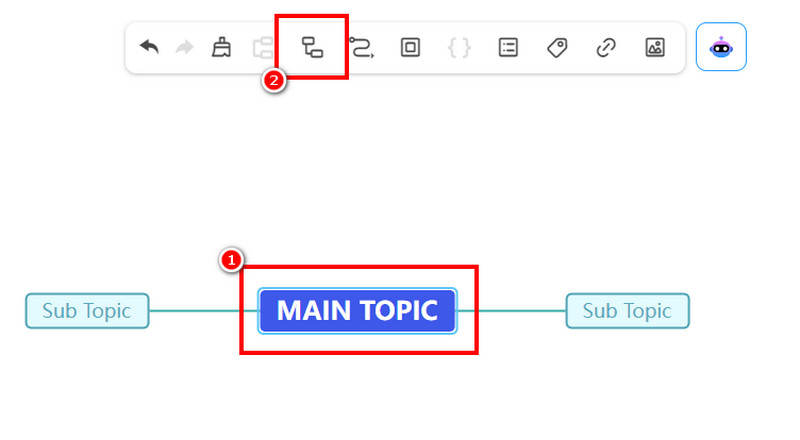
You can now start making a creative mind map. Click the Blue box and type your main topic. Then, tick the Subnode function above to insert another box for inserting various information.
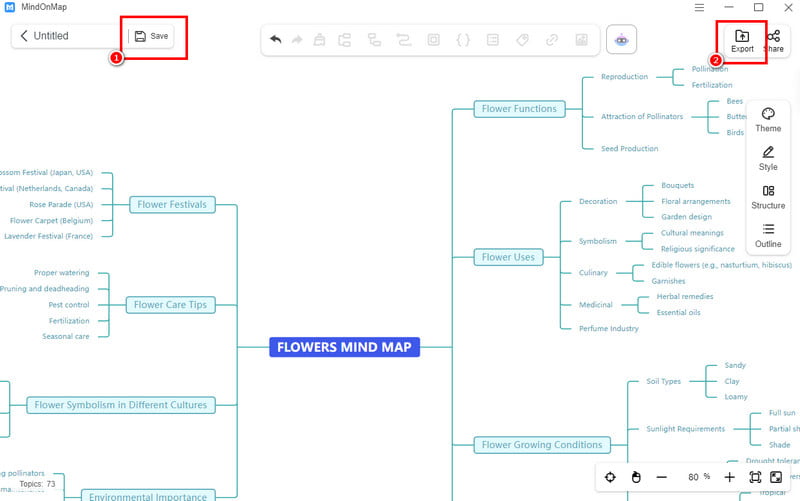
After making a creative mind map, tap the Save button above to keep it on your account. You can also use the Export button to save the creative mind map on your computer.
Thanks to MindOnMap, you can successfully make a creative mind map. You can even access all the best features you need. The best part here is that you can use various visual representations, such as content mapping, programming mapping, family tree, comparison table, and many more.
Part 4. FAQs about Creative Mind Map
What is the best mind mapping technique?
There are various techniques you can use for mind mapping. Some of them are task mapping, brainstorming, creating a SWOT analysis, Gap analysis, and more. Use these techniques and see what suits you the best.
What is the best tool to create a mind map?
If you need the best tool, look no further than MindOnMap. This tool is perfect, especially for non-professional users, since it can offer all the features you need, such as templates, lines, shapes, text, and more, making it reliable.
What is the main advantage of mind mapping?
The advantage of creating a mind map is that you can make well-structured ideas. With this visual representation, you can ensure that the viewers will understand all the information.
Conclusion
Creative mind maps are perfect if you want to get an excellent visual representation. Thanks to this article, you have learned about its simple description, along with the factors of making a creative mind map. The best part, you have discovered MindOnMap and a powerful tool that can generate an amazing mind map. Thus, always use this tool for a successful mind mapping process.