Ultimate Guide to Teaching Methods: Best for Educators
A guide to teaching methods is an important resource for professionals or educators, offering insights into the diverse strategies and approaches that facilitate effective learning. From traditional lecture-based instruction to modern, student-centered techniques such as inquiry-based learning, collaborative projects, and technology-enhanced classrooms, teaching methods shape how knowledge is delivered and absorbed. If you are looking for a detailed discussion of teaching and learning methods, look at this post. We will provide an introduction to teaching methods, including their types, pros, cons, and other details. You will also learn how to organize that information in a well-structured manner. Thus, read this article and know everything.

- Part 1. Introduction to Teaching Methods
- Part 2. What are Teaching Methods
- Part 3. Organizing the Information Using MindOnMap
- Part 4. FAQs about Guide to Teaching Methods
Part 1. Introduction to Teaching Methods
Teaching approach refers to the strategies, methods, and techniques that professionals use to facilitate learning. With this method, they can help their learners obtain skills, knowledge, and values. The good thing here is that this approach ranges from traditional methods, such as no memorization and lectures, to more modern, student-centered strategies like collaborative learning, experiential activities, and problem-solving. In addition, the choice of methods/approach depends on the subject matter, learners' needs, and instructional goals, making teaching an adaptable and dynamic process.
Furthermore, in the modern/current educational landscape, an effective teaching approach emphasizes logical and critical thinking, active participation, and the utilization of technology to enhance engagement. Methods such as differentiated instruction, inquiry-based learning, and blended learning let educators cater to various learning styles and abilities. By merging/combining traditional and innovative strategies, teachers and professionals can create inclusive environments that not only transmit knowledge but also encourage collaboration, creativity, and lifelong learning.
Part 2. What are Teaching Methods
As mentioned, teaching methodologies are the techniques and strategies professionals use to deliver knowledge, shape learners' values, and develop skills. They offer a framework for how lessons are showcased/presented, organized, and assessed, ensuring that learning objectives are effectively met. If you want to learn more about the teaching methods, read the information below.
Main Types of Teaching Methods
Teaching methods can offer various types, such as:
Teacher-Centered Method
The teacher or professor takes the main role. It delivers information or discussion through lectures or direct instruction, with students/learners listening and absorbing the material. This method focuses on structured lessons and clear guidance from the teacher.
Student-Centered Method
Learners actively participate in learning through discussion, problem-solving, and group work. The teacher will only act as a guide, encouraging collaboration and independence.
Experiential Methods
Students gain knowledge by doing projects, hands-on activities, and real-world experience. This teaching method emphasizes reflection, practice, and the application of concepts in real-world situations.
Technology-Enhanced Method
This method is engaging since it uses various platforms. It includes online tools, multimedia, and apps that can be an excellent learning support.
Teaching Methods by learning Goals
- • Knowledge Acquisition – Lecture, reading, multimedia presentations.
- • Critical Thinking – Problem-solving, debates, case studies.
- • Skill Development – Hands-on practice, demonstrations, workshops.
- • Creativity and Innovation – Brainstorming, design thinking, project-based learning.
- • Collaboration and Communication – Group projects, peer teaching, discussions.
How to Choose the Right Teaching Methods
There are some key factors to consider when selecting the best teaching strategies.Always consider your main learning (skills, knowledge, and attitudes).You have to assess your students' needs, including their learning styles (auditory, kinesthetic, and visual).Always consider the factors of time available, resources, and class size.You can align your teaching methods to the curriculum standards and assessment methods.For inclusivity, it is better to balance traditional and modern approaches.
Pros and Cons of Different Teaching Methods
To learn more about the pros and cons of different teaching methods, see the table below.
| Teaching Methods | Pros | Cons |
| Student-Centered | ●Promotes active engagement. ●Develops collaboration and critical thinking. ●Encourages independence. | ● Time-consuming to manage. ●It can be challenging with large classes. ●Requires strong facilitation skills. |
| Teacher-Centered | ●Provides clear structure and organization. ●Efficient for large groups. ●Ensures coverage of the curriculum. | ●Encourages passive learning. ●Limits student participation. ●May not address diverse learning styles. |
| Experiential | ●Hands-on, practical application of knowledge. ●Enhances retention through experience. ●Builds problem-solving and real-world skills. | ●Resource-intensive. ●May lack structure without proper guidance. ●Difficult to apply to all subjects |
| Technology-Enhanced | ●Increases flexibility and accessibility. ●Makes learning interactive and engaging. ●Supports diverse learning styles. | ●Risk of distraction. ●Technical issues can disrupt learning. ●Requires digital literacy and access to devices. |
Part 3. Organizing the Information Using MindOnMap
Do you want to organize all the information you have obtained about teaching methods? In that case, we suggest using MindOnMap. This tool is ideal if you want to create a well-structured chart or framework for organizing your information. You can use various shapes, lines, colors, text, styles, and more. The best part is that you can use this tool easily thanks to its simple user interface. Plus, this visual representation maker offers an auto-saving feature. With this feature, the tool can automatically save your output, ideal for preventing data loss. What we like here is that you can access various templates, which speeds up the creation process. To start organizing information about the good teaching techniques, see the instructions below.
You can click the buttons below to instantly access MindOnMap on your computer. Then, begin creating your account.
Secure Download
Secure Download
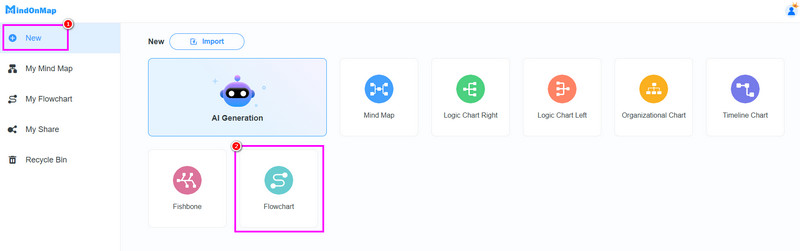
After you launch the tool's primary interface, click the New section. Then, proceed to the Flowchart feature.
You can begin organizing the information. You can use various shapes from the General section. Then, double-click the shapes to insert the text.
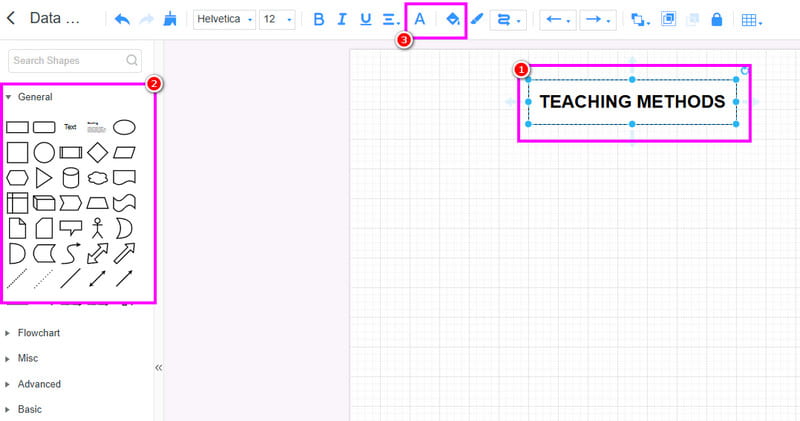
To change the color of the shapes and text, you can use the Font and Fill tools.
After organizing your information on teaching methods, click the Save button to keep it in your account. Use Export to save it to your device.
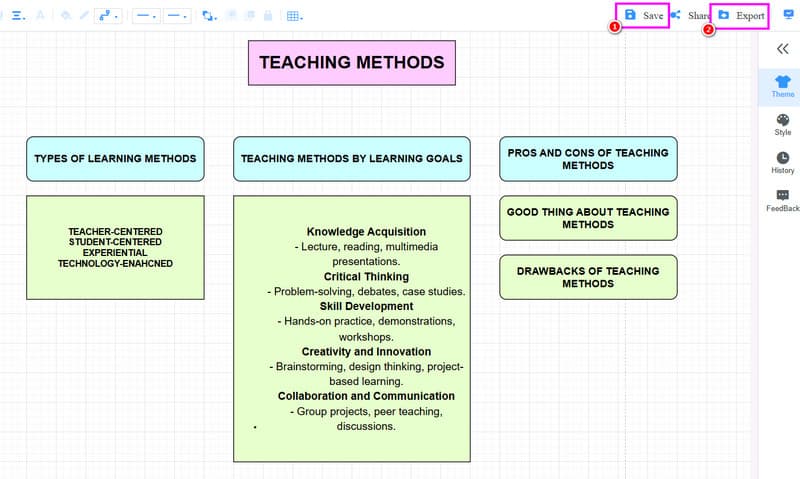
Click here to see the complete, organized information designed by MindOnMap.
Thanks to this method, you can easily organize the information about teaching methods. You can even access all the necessary functions to achieve your preferred result. Thus, if you want to craft a creative mind map or any visual representations, look no further than this tool.
Part 4. FAQs about Guide to Teaching Methods
Why are teaching methods important?
They shape how learners engage with content, influence motivation, and identify how effectively knowledge and skills are obtained.
Should I choose my preferred teaching method?
You must not choose your preferred teaching methods as a professional. Using the right method depends on the goal and the learners. This way, you will get an idea of what the best teaching methods are for imparting knowledge.
How does the student-centered method benefit students?
They encourage active collaboration, participation, and critical thinking. With this method, students can also improve their socialization skills.
Conclusion
Thanks to this post, you have learned everything about teaching methods. You even explore its types, pros, cons, and other information. Plus, if you want to organize all the information to create a well-structured framework, use MindOnMap. This tool ensures that all the data about your main topic is viewed comprehensively.