Agile Team Roles: Roles and Responsibilities of the Team
Agile team roles show and define the responsibilities and collaboration patterns that let teams deliver value efficiently. Each role, from product owner to scrum master to development team members, offers unique contributions that support adaptability and alignment. Now, do you want to learn more about the Agile team roles? You are in the right place. In this post, we will describe the core roles, responsibilities, and common challenges. You will also learn how to visualize the Agile team structure using MindOnMap. Read on to learn more.

- Part 1. What are Agile Team Roles
- Part 2. Core Roles in Agile Team
- Part 3. Responsibilities of Agile Team Members
- Part 4. Common Challenges of an Agile Team
- Part 5. Use MindOnMap to Visualize Agile Team Structure
- Part 6. FAQs about Agile Team Roles
Part 1. What are Agile Team Roles
When talking about Agile team roles, it is about the responsibilities that guide how team members work together to deliver projects effectively within the Agile methodology. The Product Owner ensures the team focuses on customer needs and prioritizes work that delivers the most value. On the other hand, the Scrum Master focuses on processes, removes obstacles, and guides the team to follow Agile principles. Lastly, the Development Team members work collectively to build, design, and test solutions. This ensures continuous progress and adaptability throughout the project.
Part 2. Core Roles in Agile Team
Want to explore Agile team development roles in more depth? If so, read all the details in this section.
Product Owner
One role in an Agile team is the Product Owner. Their responsibility is to define the product vision. They also ensure the team maintains good communication and relationships with the customer. They also handle the product backlog by focusing and prioritizing tasks based on business necessities and stakeholder input. Plus, they bridge the gap between the development team and stakeholders, ensuring objectives remain aligned and clear.
Scrum Master
Another Agile methodology team role is the Scrum Master. Their role is to facilitate and guide each team in following Agile practices and principles. They also help remove problems that may hinder progress and ensure smooth teamwork among members. By encouraging continuous improvement, the Scrum Master empowers the whole team to work appropriately.
Development Team
The Development Team is one of the roles in an Agile team. This team includes various professionals responsible for building, designing, and testing the product increment. They work together and share responsibility for delivering great results within each sprint. Their expertise ensures innovation and adaptability throughout the project life cycle.
Part 3. Responsibilities of Agile Team Members
Want to learn more about the Agile team roles and responsibilities? If so, you can review the details below.
- • One responsibility is to work together. They ensure tasks are completed efficiently and aligned with the primary objectives.
- • Communicating clearly is also a must. This is ideal for sharing progress, challenges, and feedback with the team and stakeholders.
- • Another responsibility is to adapt to changes quickly by embracing continuous improvement and flexibility.
- • Members must take ownership of their work. They must contribute to the collective success of the sprint.
- • One of the most important responsibilities is to support one another. This helps maintain a productive, motivated, and self-organizing team environment.
Part 4. Common Challenges of an Agile Team
There are also various challenges the Agile team might encounter. To get more insights about those challenges, proceed to this section.
- • Unclear Roles – When responsibilities are not assigned properly, tasks may overlap or be neglected. This confusion can reduce efficiency and weaken accountability.
- • Poor Communication – A lack of transparency or misunderstanding can slow progress or even cause misalignment. If teams don’t share updates and feedback consistently, they may struggle.
- • Overcommitment – Sometimes the team takes on more work than it can deliver within a sprint. This can result/lead to stress, missed deadlines, and reduced quality.
- • Resistance to Change – Sometimes, some team members prefer traditional methods and are against Agile practices. This reluctance can hinder adaptation and slow down innovation.
Part 5. Use MindOnMap to Visualize Agile Team Structure
Do you want to visualize Agile team structure? In that case, use a strong visual representation tool like MindOnMap Flowchart Creator. This tool is perfect since it lets you use all the features you need to create your desired structure. You can access shapes, text, connecting lines, colors, and more. With this agile tool, you can define responsibilities and map out the workflows. The best part is that it supports collaboration. With this feature, you can work with your team to ensure everyone achieves the same objective. Lastly, MindOnMap has a simple user interface. Whether you are a beginner or a skilled user, you can visualize your Agile team structure with ease.
If you want to visualize your team structure using the tool, you can check the instructions below.
Go to the MindOnMap Flowchart Creator website and create an account. You can also use the desktop version by clicking the button below.
Secure Download
Secure Download
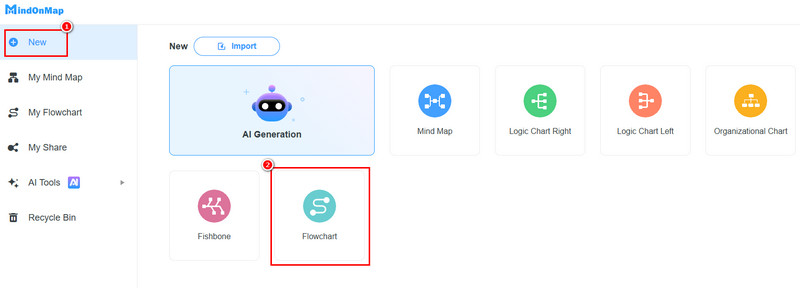
Once the primary interface shows up, proceed to the New section. Then, click the Flowchart feature to load its main interface.
You can now start visualizing your team structure. You can use shapes, text, lines, and other elements from the General section.
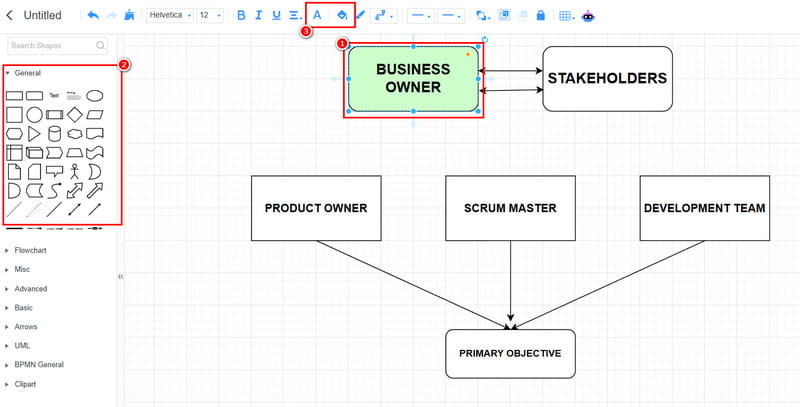
To make a colorful visual representation, use the Fill and Font Color tools above.
Once you are done visualizing your team structure, you can begin the saving process. Click the Save button/option to save it to your account. Tap Export to save it on your device.
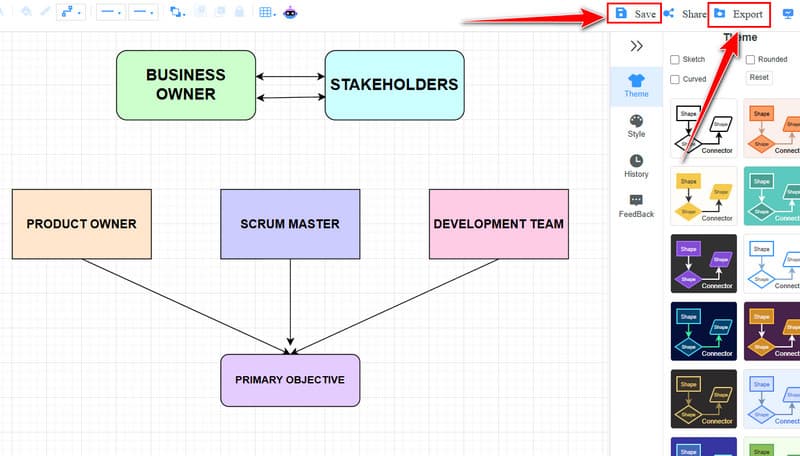
Click here to check the structure of the team designed by MindOnMap.
Part 6. FAQs about Agile Team Roles
Can a single person take multiple roles in the Agile team?
That is possible, especially on smaller teams. Members may cover more than one role, but it is best to avoid conflicts of interest, especially between Scrum Master and Product Owner.
Why are Agile roles important?
Agile roles are necessary because they create accountability, streamline communication, and keep the team focused on delivering value continuously.
Is it necessary to visualize the Agile team structure?
Definitely, yes. Visualizing the Agile team structure is ideal. A good map can help the team see the different roles assigned to each member. They can even attach the entire project plan to get more updates. To visualize team structure, you can use MindOnMap because it has all the features you need.
Conclusion
Now you have dug deeper into Agile Team Roles, along with their core responsibilities and common challenges. You also learned that MindOnMap is ideal for visualizing the Agile team structure. This tool gives you the features you need to create a well-structured, clean visual representation.