Problem-Solving Skills You May Have: What’s Yours?
One of the most important skills you may acquire for your job and daily life is problem-solving skills. They assist you in recognizing obstacles, exercising critical thought, and identifying workable ways to improve outcomes. Strong problem-solving abilities allow you to remain composed, concentrated, and resourceful in any circumstance, whether you're managing work-related activities, making critical decisions, or dealing with unforeseen problems.

- Part 1. What is Problem-Solving Skill
- Part 2. 8 Skills for Problem Solving
- Part 3. FAQS about Problem-Solving Skills
Part 1. What is Problem-Solving Skill
The ability to recognize issues, generate and evaluate potential solutions, and put the best ones into action are all components of problem-solving skills. Self-starting and cooperative, an employee with strong problem-solving abilities is proactive in identifying the underlying cause of an issue and collaborates with others to evaluate a variety of options before choosing a course of action.

Here are some instances of applying problem-solving techniques at work:
• Looking into trends to determine why last quarter's revenue dropped.
• Trying out a fresh marketing avenue to boost website registrations.
• Generate ideas for the kinds of information to distribute to prospective clients.
• Calls to action are tested to determine which ones result in the highest sales of products.
• Putting in place a new workflow to boost productivity and automate a team's operations.
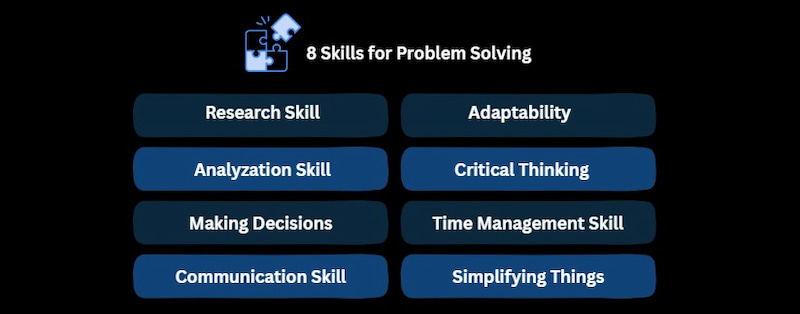
Part 2. 8 Skills for Problem Solving
The three primary components of problem-solving are determining the issue, evaluating potential fixes, and selecting the best course of action.
Research Skill
Because it helps you grasp the context of a problem, research is the first step in problem-solving. You can discover the cause of an issue by researching it. For instance, is a new sales strategy causing revenue to decline? Or due to seasonality? Is there something wrong with the person the sales staff is contacting? By conducting research, you can consider every potential explanation for why the issue might be occurring. After you figure it out, it helps you start to solve it by reducing the scope.
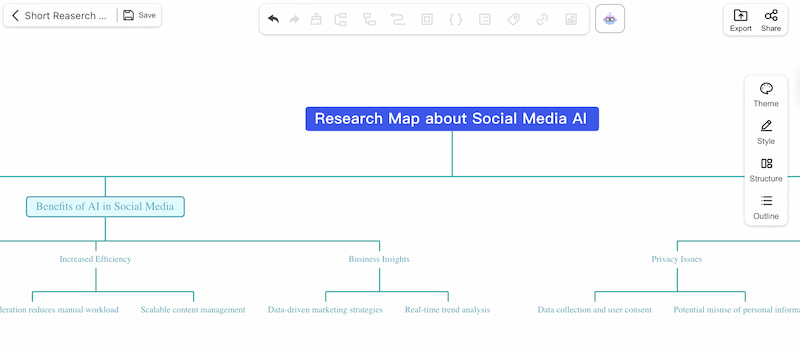
In connection with that, MindOnMap, a known mind-mapping tool that aids in the organization of study findings and the visualization of causal relationships, can help with this procedure. A mind map allows you to clearly delineate critical aspects, uncover core causes, and narrow down potential solutions more quickly. This visual technique structures the research process, allowing you to identify patterns and insights that standard note-taking may overlook.
Analyzation Skill
The next stage of problem-solving is analysis. Once the issue has been recognized, analytical abilities enable you to consider various solutions.m According to Gretchen Skalka, owner of Career Insights Consulting, the goal of analysis isn't to solve a problem; actually, it's to better understand it because that's where the real solution will be found. The only way to truly appreciate a situation from all sides is to view it through an impartial lens.
Making Decisions
After determining the root cause of the issue and potential remedies, it's time to choose the best course of action. You can identify what resources are accessible, what constitutes a workable action plan, and which solution is most likely to succeed by using your decision-making abilities. If you want to make better and quick decisions, a decision tree or flowchart may help.
Communication Skills
After you've found a possible answer, you must be able to articulate it to others in an understandable manner. This calls on the ability to communicate both orally and in writing, as well as the capacity to pay close attention and comprehend the viewpoints of others. With 44% of job advertisements using the word communication
Adaptability
Adaptability is the capacity to change with the times without losing control. It enables you to remain adaptable and rapidly switch tactics when unforeseen issues occur. Being flexible is essential in a work setting that is dynamic and fast-paced. It enables you to manage ambiguity and continue to be productive in the face of changing conditions.
Critical Thinking
Possessing critical thinking abilities enables you to analyze issues, weigh the available data, and brainstorm solutions. It entails a methodical, disciplined approach to problem-solving that refrains from making snap judgments. Critical thinkers are valued by employers. They can evaluate problems, minimize errors, and identify the best answers in challenging circumstances.
Time Management Skill
Planning your time is the essence of time management abilities. It facilitates meeting deadlines and increasing productivity. You can solve problems more quickly without compromising quality if you learn time management skills. Time management is key. Whether you operate in a team or alone, it guarantees that crucial activities are completed on schedule. Delays and stress are reduced as a result.
Simplifying Things
Dividing complicated issues into smaller, more manageable components is known as simplification. This method speeds up the process of finding answers. It accomplishes this by eliminating extraneous details and concentrating on the important points. Problem simplification lowers the possibility of overlooking important details. It also increases the likelihood that a good solution will be found, especially in stressful situations.
Part 3. FAQS about Problem-Solving Skills
Why is the ability to solve problems important?
They are necessary for making decisions, conquering obstacles, and increasing productivity at work or in daily life. Employers can see that you can think critically and manage pressure if you have strong problem-solving abilities.
How can I get better at solving problems?
Seek feedback, examine prior experiences, apply logical reasoning, and maintain composure under duress. Solving problems, having conversations, and dealing with real-world issues all help you become more adept at coming up with original and workable answers.
How does one begin to solve a problem?
Clearly recognizing and comprehending the issue is the first step. Finding the underlying reason helps you concentrate on the true problem, avoid wasting time, and find focused, efficient remedies.
Is it possible to learn how to solve problems?
Indeed, they can be cultivated via experience and practice. Anyone can improve their capacity for effective problem-solving by taking on various tasks, considering the results, and picking up new techniques.
Are problem-solving abilities limited to the workplace?
No, they are also useful in day-to-day living. You can improve your career performance and general life management by using problem-solving skills to make judgments, prepare effectively, and calmly handle unforeseen or personal obstacles.
Conclusion
The ability to solve problems is crucial for both career and personal development. They enable people to recognize problems, evaluate circumstances, and implement workable solutions. You may overcome obstacles with confidence, make wiser choices, and accomplish better results in any circumstance by honing these abilities, which include communication, flexibility, and critical thinking. In addition to increasing productivity, developing your problem-solving skills promotes creativity, resilience, and ongoing progress in both your personal and professional life.