Project Management Schedule: Description and Importance
A project schedule is an organized timeline that shows when tasks, milestones, and deliverables should be completed within a project. It also serves as a roadmap for the team, ensuring resources are allocated efficiently and deadlines are met. By showing a clear direction, a project schedule helps keep the task/project on track. To learn more about project schedules, read here for details on their importance, key components, and the best tool for building project schedules visually.

- Part 1. What is a Project Schedule
- Part 2. Importance of Project Scheduling in Management
- Part 3. Key Components of a Project Schedule
- Part 4. Use MindOnMap to Build Project Schedules Visually
- Part 5. FAQs about Project Schedule
Part 1. What is a Project Schedule
A project schedule is a detailed plan that outlines the timeline for completing tasks, milestones, and deliverables. A schedule can provide a clear sequence of activities. It shows when the project starts and ends to ensure smooth progress. By scheduling a project, the team can stay focused and aligned with project goals.
Beyond dates, a project timeline considers potential hazards, dependencies, and resource allocation. It also serves as a communication tool, updating interested parties on progress and expectations. Ultimately, a well-organized project plan boosts productivity, minimizes delays, and supports the project's successful completion.
Part 2. Importance of Project Scheduling in Management
Read this section and learn about the structured breakdown of the importance of project scheduling in management.
Ensures Timely Completion
A project schedule sets clear deadlines for tasks and milestones. It can help the team to stay on track. By defining start and end dates, it can reduce the risk of delays. It can even keep the project aligned with the entire timeline.
Enhances Resource Allocation
Managers can effectively allocate resources. It includes personnel, equipment, and funds through scheduling. It ensures that all resources are used as efficiently as possible by preventing overallocation or underutilization. This process promotes productivity and minimizes waste.
Improves Communication and Coordination
A schedule can also offer a shared roadmap. It keeps all team members informed about project expectations and progress. It can also clarify responsibilities and ensure smooth collaboration across teams. If everyone is aligned, it can minimize conflicts and misunderstandings.
Facilitate Risk Management
Project scheduling helps in the early detection of possible challenges. The schedule allows you to outline dependencies and essential paths. Before problems worsen, project managers can foresee dangers and put backup measures in place. This proactive approach strengthens project resilience.
Boosts Accountability and Transparency
A good schedule makes it easier to track progress. Each team member is responsible/accountable for their tasks, and managers can track performance objectively. With this transparency, it can build trust among stakeholders and support informed decision-making.
Part 3. Key Components of Project Schedule
A project schedule is built around various components that work together. It is an essential part of effective project management, helping ensure smooth execution and timely delivery. These elements define what needs to be accomplished, when it should be achieved, and how tasks connect, creating a clearer blueprint for the team. See the information below to learn more about the key components of a project schedule.
Tasks
These are the individual units of work that must be completed to obtain the project goal. They divide the project into manageable steps, making it easier to assign responsibilities. Each task contributes to the overall progress of the project.
Timeline
The timeline specifies the start and finish dates of tasks/projects, deliverables, and milestones. The timeline ensures deadlines are clear by providing a visual schedule of the project's timeframe. This helps each member avoid last-minute rushes and pace their work with a well-organized timeline.
Milestones
It represents a significant checkpoint or achievement within the project. They point out progress by highlighting when major phases are completed. These highlights or markers encourage the team and provide a way to measure the project's success.
Dependencies
It illustrates/shows the connections/relationships between tasks, showing which must be finished before moving on to the next. They help identify critical paths and potential schedule bottlenecks. Effective dependency management supports an efficient workflow and helps avoid delays.
Part 4. Use MindOnMap to Build Project Schedules Visually
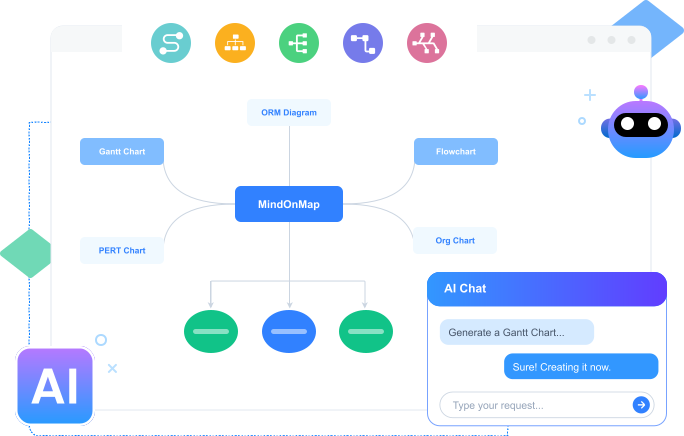
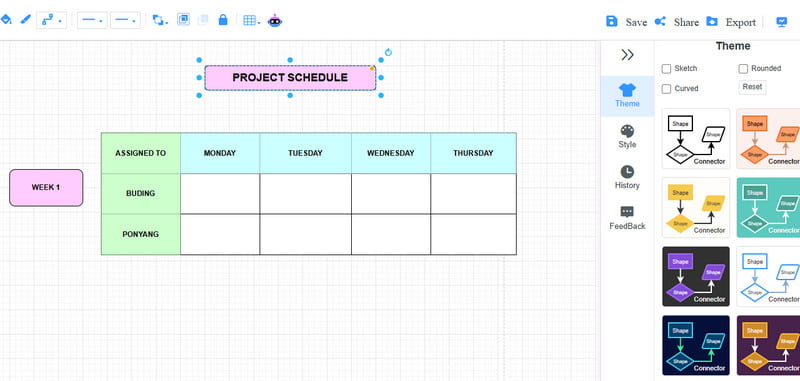
Do you need project scheduling software to create the best project schedules visually? If so, we suggest using MindOnMap Flowchart Creator. When it comes to creating the best visual representation, this tool is no doubt helpful. It can even offer an ideal user interface that lets you use all the functions with ease. You can access various shapes, templates, font styles, and more. The best part is that it lets you do everything related to project scheduling. It includes:
Organizing Tasks
The tool can also help you organize all the tasks. You can divide the tasks into branches and sub-branches. This way, you can see all the responsibilities and priorities at a glance. This structure ensures nothing is overlooked and that all members know their roles.
Tracking Deadlines
This project scheduling tool lets you set clear due dates within your visual schedule. It makes the deadline easy to monitor. It can even help you keep the project on schedule.
Improving Time Management
By visualizing the entire workflow, the tool helps you balance workloads and identify bottlenecks or challenges. These insights can serve as practical time management tips, helping teams proactively adjust schedules and make more efficient use of their time and resources.
Secure Download
Secure Download
Part 5. FAQs about Project Schedule
Is there a project scheduler job?
Absolutely, yes. This kind of job exists, especially in construction fields. It requires someone skilled in managing projects, especially planning and execution. They ensure the project progresses smoothly and can overcome potential bottlenecks during the process.
Which tools are commonly used for project scheduling?
You can use various tools for project scheduling. Some of them are MindOnMap, Asana, Trello, Microsoft Project, and more.
Can the project schedule change during execution?
The answer is yes. Schedules are often adjusted to reflect changes in unforeseen delays, resources, and scope. It is needed to ensure that the project remains achievable and realistic.
Conclusion
Now you have learned everything about project management schedules. You have also gained an idea about its importance and key components. Plus, if you want to visualize your project schedule, we recommend using MindOnMap. This tool offers all the features you need. You can use various shapes, connecting lines, tables, colors, and more. Use this tool to create an exceptional project schedule.