Understanding Task Analysis: Its Importance and Steps
Task analysis is a systematic procedure used to break down complicated activities into smaller, manageable steps to get more insights about how tasks are performed. This process can help determine the skills, tools, and information required to finish the task. In this article, we will give you all the information you need about the topic. We included its complete definition, its importance, steps to conduct a task analysis, and more. To find more information about the discussion, start reading everything from this post.

- Part 1. Why Task Analysis is Important
- Part 2. Complete Definition of Task Analysis
- Part 3. Use MindOnMap for Task Workflow
- Part 4. FAQs about Task Analysis
Part 1. Why Task Analysis is Important
Task analysis is important since it provides clarity and structure to complicated tasks, making them simple and easier to teach, learn, and perform. Additionally, breaking down activities into smaller processes helps identify the tools, knowledge, and skills needed at each stage. It is to ensure that nothing is overlooked. This systematic approach is especially valuable in education, training, and workplace settings, where clear instructions and efficient workflows directly impact performance and outcomes.
Furthermore, task analysis not only increases productivity. It also reveals/shows possible problems and places for improvement. It enables professionals, managers, instructors, and trainers to determine areas in which students or staff members could struggle and to create focused interventions or support. In reality, this results in more efficient use of resources, fewer mistakes, and more output. Thus, we can tell that task analysis serves as a basis for ongoing development, assisting people and organizations in streamlining procedures and achieving objectives more successfully.
Types of Task Analysis
| Types of Task Analysis | Simple Description |
| Hierarchical Task Analysis | Breaks a task into goals, sub-goals, and steps, showing the structure and order of how tasks are completed. |
| Procedural Task Analysis | This analysis focuses on the exact sequence of actions or steps needed to complete a task, often used for training or manuals. |
| Cognitive Task Analysis | Examines the mental processes underlying task performance, including decision-making, problem-solving, and memory use. |
| Contextual Task Analysis | Considers the environment, tools, and social or organizational context in which tasks are performed, highlighting external influences. |
Part 2. Complete Definition of Task Analysis
What is Task Analysis?
Task analysis is an organized process of dividing tasks, skills, and workflows into visible, quantifiable steps, tools, conditions, and decisions. Plus, task analysis lets organizations plan training, assess performance, standardize, and minimize risk through a unified execution.
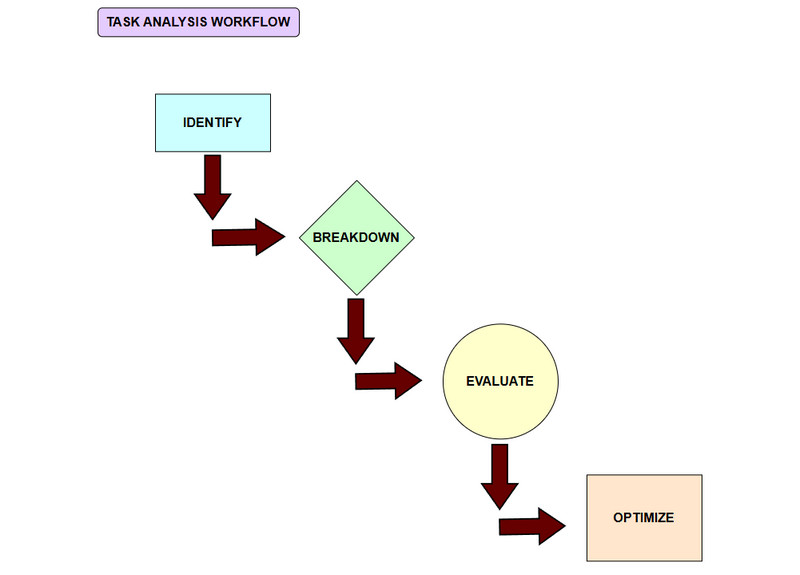
The core purpose of task analysis is precision. It describes the precise environment, inputs, steps, decisions, and success criteria for a process rather than providing broad advice. Consistent training, simpler troubleshooting, and quicker recognition of flaws, delays, or safety concerns are all made possible by this precision. It guarantees that teams adhere to the same standards at the organizational level, which lowers errors and improves overall performance.
Steps to Conduct Step Analysis
Identify
The first step is to clearly define the task you want to analyze. It involves choosing a specific activity or procedure and learning its purpose, desired outcome, and scope.
Break Down
In this step, you have to divide the task into smaller, logical steps. Each step shows a different action or decision point. This breakdown makes complicated tasks easier, making it more comprehensive, especially for understanding and highlighting the sequence in which actions must occur.
Evaluate
You have to assess each step for efficiency, clarity, and potential challenges. It involves some questions, such as Is this procedure important? Where might errors occur? Could it be simplified? This step ensures that the task is not only understood. It was examined for redundancies and weaknesses.
Optimize
This last step refines the task by eliminating unimportant steps, adding support where difficulties arise, and streamlining actions. This step focuses on reducing errors, making the task easier, and improving the overall performance.
Sample Task Analysis and Case Study
For example, an educator might perform task analysis on 'writing a persuasive essay' in a classroom setting. This would entail identifying the task, breaking it down into steps, like selecting a topic, researching, drafting, and revising. After that, the teacher must assess student difficulties at each stage and optimize the process by offering targeted guidance or resources. They can also make study plans to help students learn more effectively.
Tips and Best Practices
- Always start with clear objectives. It is ideal to avoid unnecessary steps.
- For accurate insight, you must involve stakeholders, such as students, users, employees, etc.
- You can use a visual representation, like mind maps or a flowchart, to make the steps easier to follow.
- Continuously review and update the analysis as the task evolves.
Part 3. Use MindOnMap for Task Workflow
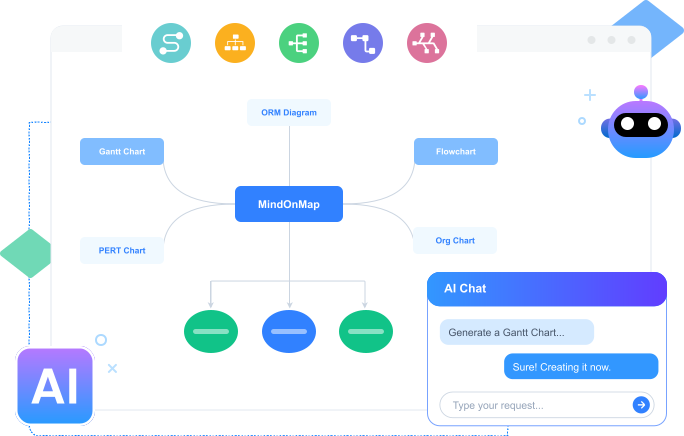
Are you planning to create a task workflow to check your overall task analysis? Then, you must use an excellent tool that can assist you in creating the best result. In that case, we suggest using MindOnMap Flowchart Maker. This tool is perfect if you want to create a comprehensive workflow that can show all your tasks. What makes it more helpful is that you can use all the elements you need. It includes multiple shapes, connecting lines, font styles, colors, and more. You can also use the theme feature for crafting an engaging output.
Additionally, the tool can support an auto-saving feature. With this feature, that tool can automatically save your workflow, ideal for preventing data loss. Thus, if you want to create the best and well-structured task workflow, always rely on MindOnMap.
Follow the detailed method below to learn how to create your task workflow.
You can click/tap the Download buttons below to easily access MindOnMap on your desktop. After that, you can connect your Gmail to create an account.
Secure Download
Secure Download
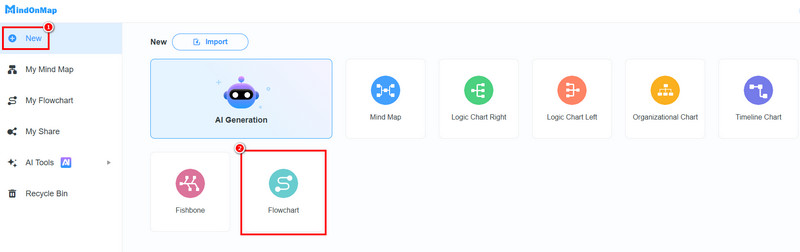
After you open the primary interface, go to the New section and hit the Flowchart feature. Then, the main interface will show up on your screen.
You can start creating your task workflow. Go to the General section to use various shapes. Then, double-click the shapes to insert all the information.
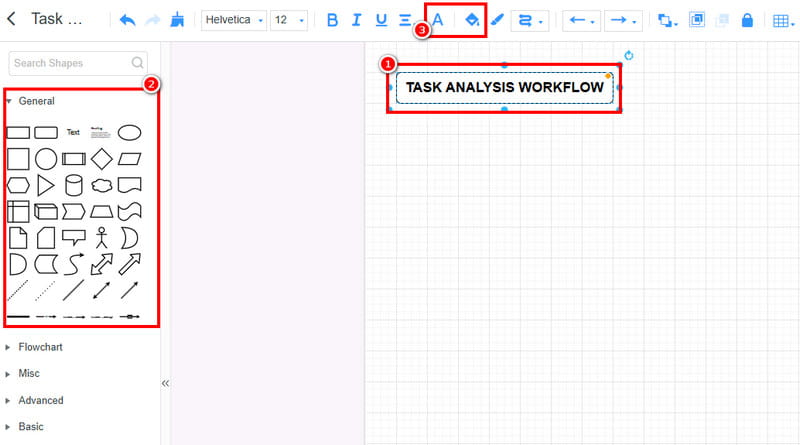
To add color to your font and shapes, access the Font and Fill features above.
To save your final task workflow, hit the Save button above. If you want to save it on your desktop in various formats, access the Export feature.
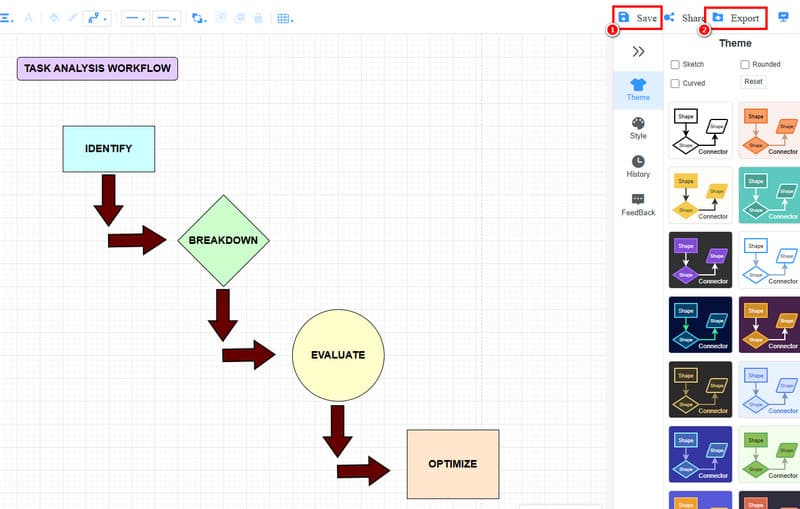
Click here to see the entire task workflow designed by MindOnMap.
With this method, you can craft your task workflow easily and smoothly. Thus, always rely on this tool and get your preferred visual representation.
Part 4. FAQs about Task Analysis
What are the four types of task analysis?
The four types of task analysis are Hierarchical task analysis for structure, Cognitive task analysis for mental processes, Procedural task analysis for documentation, and Performance-Based task analysis for evaluation. Well, there are more types you can explore if you want to understand the task analysis better.
Who uses task analysis?
Various people can use task analysis. Some of them are trainers, teachers, managers, UX designers, and more. They are using task analysis for designing better workflows, a simple system, and a learning experience.
What is the difference between task analysis and process mapping?
When talking about process mapping, it is about revealing the flow of tasks at a high level. On the other hand, the task analysis digs deeper into the specific steps, decisions, and skills required to complete each task. The analysis is used to break down, understand, and enhance how tasks are performed. Plus, it helps determine the skills, steps, and context required to complete the task.
Conclusion
After reading everything, we can conclude that task analysis is a reliable process that can help you break down tasks, workflows, and skills, and can even improve the learning experience. Thus, if you want to learn more about the topic, it would be better to read all the information from this post. Plus, if you want to create your task workflow, we recommend using MindOnMap. This tool ensures that you can create an excellent visual representation that shows your task workflows in a comprehensive manner, making it the best tool for users.