Silo Mentality Meaning, Causes, Effects, and Ways to Prevent
There is a high chance of Silo mentality when the whole department's or team's work is in isolation. This most likely leads us to limit the collaboration and efficiency of the business. That is why, in this article, we will navigate more of its definition, its causes, the effects it can bring to organizations, and practical ways to fix it. We will also navigate the common mistakes, pros, cons, and actionable steps to break this mentality. Finally, we will see how MindOnMap can easily help us visualize and have a structured organization for better communication within teamwork across the company.

- Part 1: What is Silo Mentality?
- Part 2: How to Fix Silo Mentality
- Part 3: Common Mistakes, Tips, Pros, and Cons
- Part 4: Use MindOnMap to Map Organizational Silos
- FAQs about Silo Mentality
Part 1: What is Silo Mentality?
Silo Mentality
As an overview, Silo Mentality is a mindset where the whole departments or teams in your organization are resisting sharing information, processes, and goals. These actions or isolations lead to a divisive culture, reduce efficiency, and can prevent us from achieving organizational success.
Causes
- • Weak Leadership. The gap in communication and unclear vision from the leaders or bosses.
- • Competitive Team. Each team focuses on its own goals over the overall company-wide objectives.
- • No Trust. The management sees employees as untrustworthy.
- • Poor System. The tools for collaboration among the team are not sufficient.
- • Cultural Rigidity. There is a we-versus-them mindset going on.
Impact on Organizations
- • Reduced Innovation. There are barriers that cause the ideas to be isolated.
- • Unproductive. This can lead to duplication of work and wasted resources.
- • Goal Misalignment. Your organization will surely suffer in terms of achieving your goals.
Part 2: How to Fix Silo Mentality
We shall now offer actions to fix this kind of mentality in your organization. We have listed some of the great ways to do so in order to fix it. Look below for the strategies and some examples that have been used in real industries.
Strategies in Fixing Silo Mentality
- • Unified Company Goals. Create unified objectives and goals with your company. This can bring great collaboration and unified purposes within the team.
- • Trust-building Culture. We need to recognize the small wins and achievements of our teammates. Small acts of rewarding them might help.
- • Enough Collaborative Tools. The organization needs to adopt project management and mapping software to reconnect workflows.
Examples and Case Studies
- • Southwest Airlines. They improved their customer satisfaction by using open communication between their pilots, crew, and ground staff.
- • Google. They have shared OKRs, or Objectives and Key Results. This aligns the divisive global team.
- • Toyota. They integrate departments and reduce inefficiency by applying lean management principles.
- • Philippines SMEs. They improved their coordination between sales and operations by adopting digital collaboration.
Part 3: Common Mistakes, Tips, Pros, and Cons
Here are some common mistakes that we need to avoid to prevent Silo mentality in the workplace. We also have some practical tips to follow, and the pros and cons of having a strategy for this mentality.
Common Mistakes
- • Bypassing Leadership Roles. The leaders are not known and fail to set the tone for collaboration.
- • Short-term Fixes Only. The management is creating temporary solutions only.
- • There is No Accountability. The lack of accountability among people will let the problem recur all over again.
Tips
- • Have a shared vision and clear communication across the team and department.
- • Set SMART goals, specifically measurable goals. Use KPIs as you manage and track collaboration success.
- • The progress should be shared openly as you build trust. This can encourage transparency.
- • Reviewing and adjusting the strategies based on the outcomes and constructive criticism is good practice.
Pros and Cons
Let us now talk about the pros and cons of having a great strategy to fix the problem of silo mentality in your organization.
PROS
- This can improve collaboration for your team across any functions.
- Shared ideas can lead to higher innovation.
- The unified team can produce high-quality work and services.
- It encourages and motivates employees.
CONS
- The process of creating a strategy is time-consuming.
- Having too much collaboration can lead to uncertain accountability.
- It can be expensive for training, tools, and strategy planning.
Part 4: Use MindOnMap to Map Organizational Silos
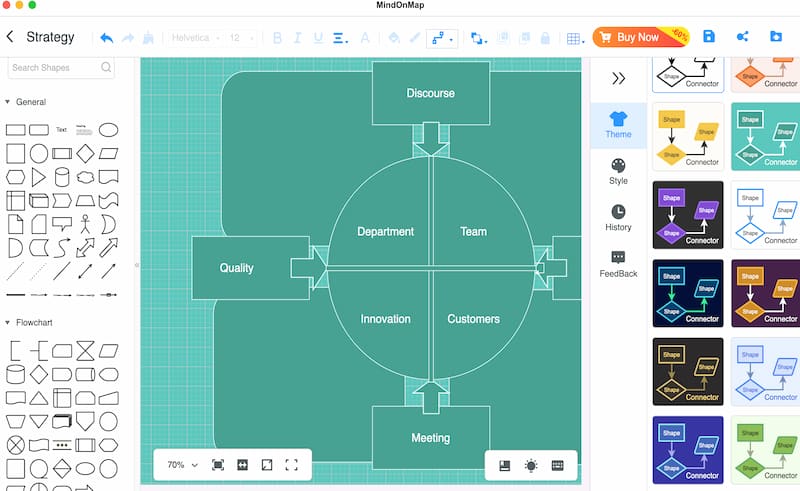
We learned that Silos mentality within an organization is a problem towards achieving business success. That is why having a plan or strategy is a good thing to do. In line with that, we would like you to know that MindOnMap is a great tool that offers various features to visualize your strategy for fixing a silo mentality in your company. This tool is known for its various kinds of charts, maps, and flowcharts that can help us have clear directions for any project and strategy that we need to execute. In this part, we will demonstrate how easy it is to use. Take a look at the steps you need to follow below:
Get the incredible tool MindOnMap from its official website. You can get it for free so that you can immediately install it on your computer.
Secure Download
Secure Download
On your computer, please open the tool and find the Flowchart feature among the options. This can easily help you create a flowchart online with full control.
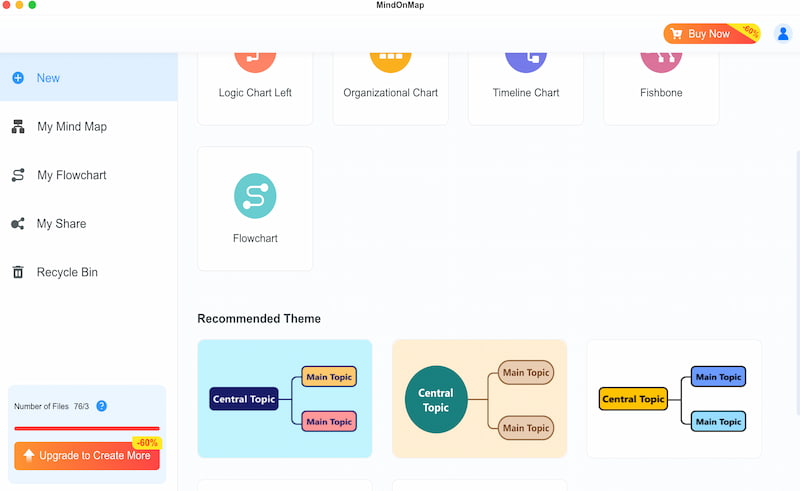
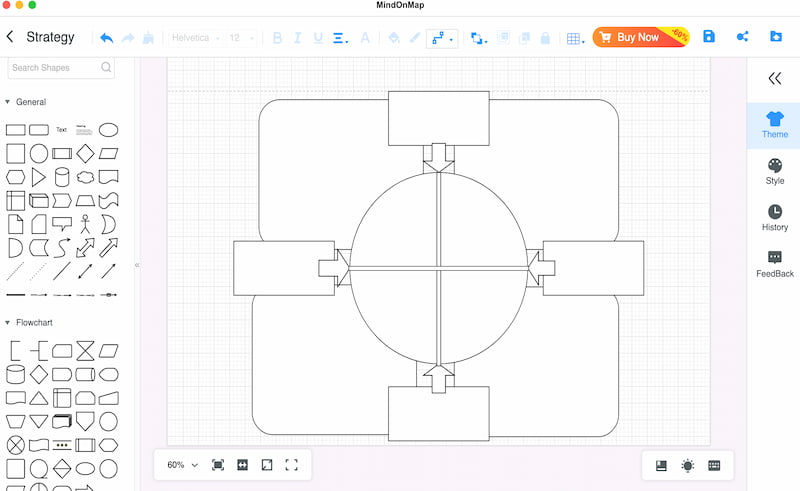
Use the Shape features now to start building your strategy's layout.
Add some text to each shape you added. This is the part where you add depth to your visual material.
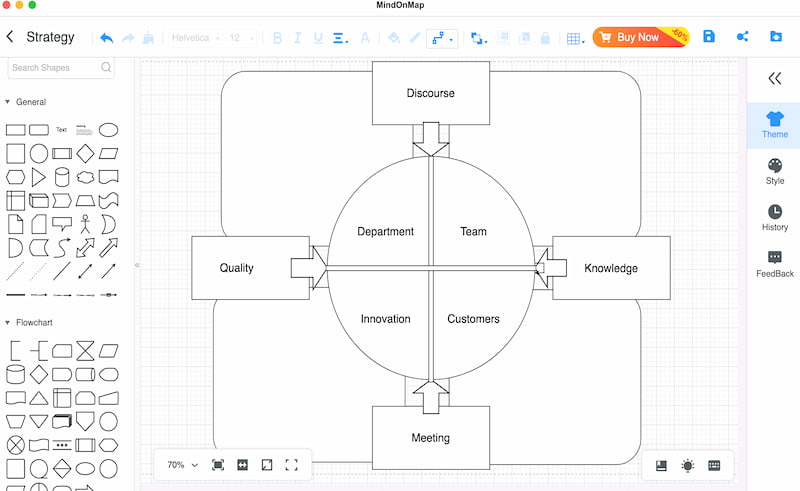
After doing those steps, we shall now set the overall look of your strategy. Select the Theme you want to see. It will make the design more presentable for your teammates. Finally, click the Export button and save the file in your preferred format.
We helped a 120-person SaaS business break down organizational silos. Obvious symptoms were duplicate work and misaligned team goals. We prioritized cross-team sync meetings. After three months of consistent practice, information sharing improved and project bottlenecks eased.
That is the ability of MindOnMap in helping us create a good visual board for our strategy in eliminating silos mentality. We can see that it is effective, easy to use, and most importantly, a free tool. Therefore, this can help us stay on a budget while maintaining an effective strategy and plan.
FAQs about Silo Mentality
Q: What is the difference between silo mentality and the silo effect?
A: Silo mentality is the inward-focused mindset of teams that hoard information and prioritize local goals over shared company goals. The silo effect is the measurable negative outcome of that mindset: duplicated work, misalignment, delayed projects and inconsistent customer experience.
Q: How do you break down silos for fully remote teams?
A: Remote teams need lightweight, structured cross-team rituals rather than casual hallway conversations. Shared documentation spaces, rotating cross-functional check-ins and a unified visual workflow map all help reduce isolation.
Q: Can small teams also suffer from silo mentality?
A: Yes. Silos are not only a big-company problem. Even small teams can form hidden silos when roles are rigid, communication channels are fragmented, or individual incentives conflict with shared team outcomes.
Conclusion
To conclude, silo mentality is a huge problem for your organization or team. This can easily prevent your company from thriving and being successful in this field. That is why preventing this with a different strategy is a good thing to do. We gave you some of the examples and tips to make it. In addition, do not forget that using these strategies is better when you visualize them using MindOnMap. This is a great tool to use and is free, so get it now.