How to Have Constructive Communication: Improve Your Communication Skills
The world nowadays has better and faster-paced communication through evolving technology and social media communication applications and sites. However, these media are not used in good terms often, because fake news and cyber-bullying are all over the internet. Moreover, sharing your options and point of view can now be done via easy typing and one click of the Post button.
In this era of technology and fast-paced information, constructive communication skills are crucial to maintain a balanced conversation not only all over the internet but also in our daily life. Thus, this post exists to give us an idea of what constructive communication is and why it is important. Start reading now to learn more.

- Part 1: What is Constructive Communication
- Part 2: Why Constructive Communication Matters
- Part 3: How to Give Constructive Criticism
- Part 4: Use MindOnMap to Streamline
- FAQs about How to Have Constructive Communication
Part 1: What is Constructive Communication
Constructive communication is an approach to interpersonal interactions that seeks to foster understanding, cooperation, and growth. This is very needed, especially in a group with diverse opinions and points of view. However, it is important to know that it is more than just voicing ideas and opinions. It entails actively listening, appreciating different viewpoints, looking for areas of agreement, and achieving a win-win outcome. Even in the face of conflicts or opposing points of view, we may have meaningful talks because this style of communication creates an atmosphere of openness and trust. In the end, constructive criticism aims not to harm, but to allow the other side to be better and learn from their mistakes.
Constructive communication is also crucial for promoting cooperation in the workplace since it facilitates efficient collaboration, promotes a diversity of viewpoints, and eventually boosts team productivity and creativity. More significantly, it strengthens bonds between coworkers by promoting candid communication, attentive listening, and compromise, as well as by turning disagreements into chances for development and understanding.
Part 2: Why Constructive Communication Matters
Constructive communication promotes cooperation, builds trust, and settles disputes. It avoids the blame game and lessens emotional intensity by concentrating on resolving particular problems, actions, or circumstances rather than criticizing someone's character. With that, here are a few points to show why this matters:
Build Relationships
Having a constructive conversation means helping us to build relationships, which helps people feel heard, respected, and affirmed. It creates a secure atmosphere where people can freely exchange ideas without worrying about criticism, which results in stronger bonds.
Promotes Clarity
Constructive communication is also the hidden engine of good work, generating outcomes and lowering mistakes in professional settings. This also encourages clarity within conversation by giving precise, actionable, and unambiguous feedback. It makes sure that everyone is on the same page about expectations and objectives.
Promotes Collaboration and Innovation
It promotes the sharing of various points of view, enabling groups to use these to solve issues. More than that, creative ideas can be exchanged and improved in a safe setting that welcomes candid criticism, which leads to better decision-making.
Part 3: How to Give Constructive Criticism
We get it if you are having a hard time giving constructive criticism. Communication can be learned as long as you are open to it. In line with that, allow us to give you some dos and don’ts that you can use in giving constructive criticism.
Do: Give Actionable Feedbacks
Giving someone constructive criticism aims to provide them with something to improve. Good constructive criticism not only identifies areas for improvement but also offers suggestions for the individual to pursue in order to advance their abilities. When offering comments, be careful to make it clear that you're willing to engage in additional conversation or brainstorming if that would be beneficial to the recipient.
Do: Give Feedback in a Timely Manner
If constructive criticism is offered immediately after the action, it might be beneficial. In this manner, the situation is still vivid in your imaginations. Your feedback may become less useful if you wait too long, since it may become less relevant. Try to respond to the matter within two to seven days.
Do: Friendly Tone
If constructive criticism is offered immediately after the action, it might be beneficial. In this manner, the situation is still vivid in your imaginations. Your feedback may become less useful if you wait too long, since it may become less relevant. Try to respond to the matter within two to seven days.
Don't: Express your Opinions Publicly.
Always correct privately. Even the most well-written criticism can be difficult to accept, particularly if the recipient puts a lot of effort and time into their work. You want to start a conversation about how the person can get better so that the criticism is beneficial and constructive.
Don't: Provide Criticism without Thinking
Although you want to provide feedback as soon as possible, you don't want to do it carelessly. Wait at least a day to make sure you can provide constructive, positive comments, even if you had an epiphany about how this individual should do better. Prior to setting up your feedback session, consider the following:
- Will this criticism aid in their improvement?
- Do they have to hear this criticism?
- Am I ready to assist them in coming up with ideas for improvement?
- What can the person do next, if at all?
Don’t: Force Your Positivity
Nevertheless, you should steer clear of forced positivity in the same way that you would steer clear of the sandwich strategy. Constructive criticism is meant to assist the person grow and progress, not to provide them useless praise.
Part 4: Use MindOnMap to Streamline
Mind mapping is a powerful tool for fostering constructive communication. It makes it simpler for people and groups to recognize links between concepts, pinpoint shared objectives, and consider other viewpoints by graphically organizing complex information. A mind map, like the one on MindOnMap, can be used to organize conversations in a way that promotes cooperation and the examination of other points of view.
MindOnMap possesses different elements like shapes, themes, and text that we can all use in organizing our insights for giving constructive criticism. Here’s a quick process to use MindOnMap Flowchart Maker with ease.
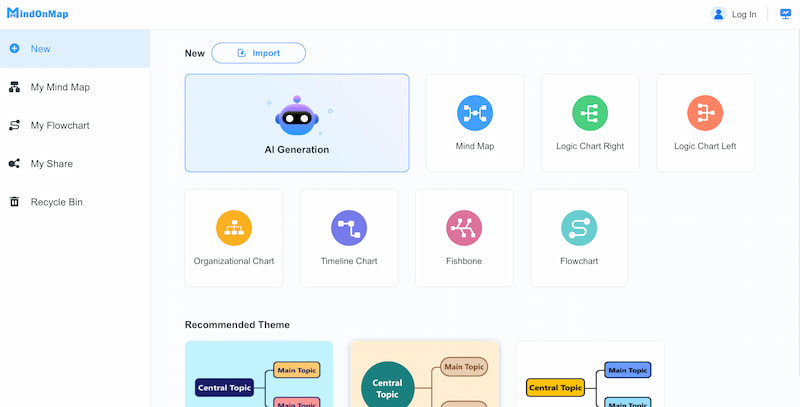
Step 1. Get MindIOnMap from their official website for free then install it on your computer. Immediately launch the tool on your computer and see its main interface. Click the Flowchart from there.
Step 2. On the editing interface of the tool, please add Shapes to start building the foundation design of your streamline for constructive criticism. Add as many shapes as you need.
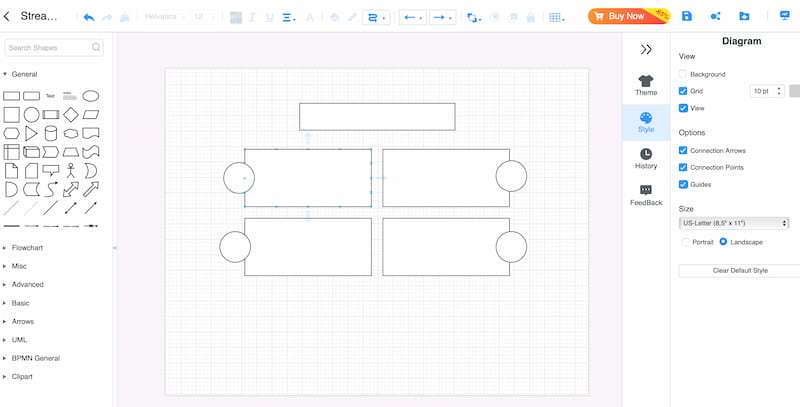
Step 3. You can now add Text on each shape you just added. These will be the details and key points you need for your streamline of constructive criticism.
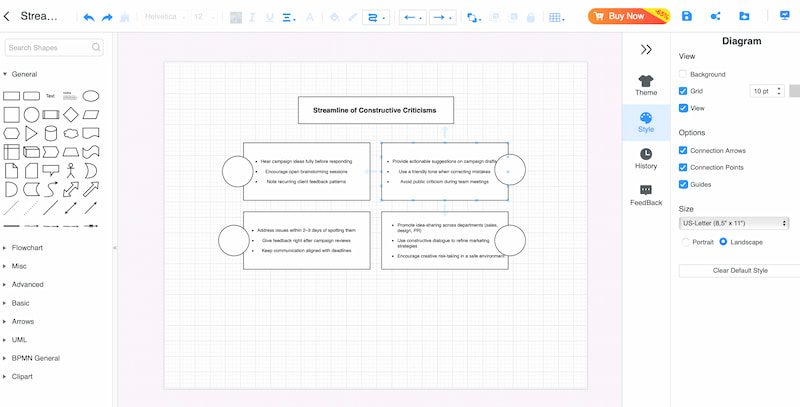
Step 4. Finalize your map by adding Theme or Color as you also set the totality of the chart. Then, click the Export button to save your output.
That is the simplicity and effectiveness of MindOnMap in helping us create a streamlined approach to giving constructive criticism. We can see that it really helps us organize our thoughts for better communication and aligns well with a communication matrix, allowing us to structure ideas clearly and ensure messages are delivered with the right tone, intent, and clarity. Start improving your constructive communication today by organizing your ideas with MindOnMap.
Part 5. FAQs about How to Have Constructive Communication
What distinguishes regular communication from constructive communication?
While constructive communication places an emphasis on fostering cooperation, resolving problems, and establishing trust, regular communication may just comprise sharing information.
Why is it crucial to provide constructive criticism at work?
By transforming conflicts into chances for development, it helps teams perform better, promotes creativity, and fortifies bonds.
How can I make sure my criticism is helpful?
Make practical recommendations, give prompt feedback, speak in a cordial manner, and refrain from disparaging someone's morals. Instead, concentrate on actions and results.
What is an example of constructive communication?
Constructive communication is giving feedback in a respectful and helpful way, for example: “Your report is good, but adding more data would make it stronger.”
How can I improve my constructive communication skills?
You can improve by listening actively, speaking clearly, staying respectful, and using MindOnMap to organize your ideas.
Conclusion
Constructive communication can easily help us build trust, encourage teamwork, and turn disagreements into learning experiences. Relationships grow stronger and mutual success is achieved through active listening, prompt and useful feedback, and respect. In line with that, tools like MindOnMap can further simplify discussions, enhancing team collaboration and supporting effective conflict resolution. Good thing, you can use it now for free.