Job Description: Description, Components, and Importance
A job description is a format document that shows the duties, responsibilities, and qualifications required for a specific role within the business or organization. It serves as a guide for both employees/candidates and employers, clarifying expectations and defining the scope of work. Well, a job description also has various components and importance. To get more information about the discussion, we suggest reading everything in this post.

- Part 1. What is a Job Description
- Part 2. Key Components of Job Description
- Part 3. Why Job Descriptions Matter in Hiring
- Part 4. Use MindOnMap to Structure Job Roles Clearly
- Part 5. FAQs about Job Description
Part 1. What is a Job Description and Responsibilities
What is a Job Description?
It is a written statement that defines the responsibilities, qualifications required, and duties for a specific role within a company or organization. It can provide clarity on what is expected from an employee, ensuring that both the employer and worker understand the scope of the role. Additionally, this document often includes details, such as job title, skills, tasks, and reporting relationships.
What are the responsibilities?
These are the specific tasks/roles and obligations assigned to the employee. The responsibilities can also be seen in the job description. They define what an employee is accountable for. It includes completing the job, meeting deadlines, or handling a team. Clear responsibilities can help improve performance, complete projects, and align individual contributions with organizational objectives.
Is there a Job Description Template?
Yes, there is. Some of the companies create a job description template to organize all the information. This way, the employee can access all the information they need regarding the job. There are also tools you can rely on to create the template. Some of them are MindOnMap, PowerPoint, XMind, and more.
Part 2. Key Components of Job Description
Proceed to this section and get to know more about the key components of the job description.
Responsibilities
These are the specific tasks and duties that the employer can assign to their employee. They define what the work entails on a daily basis and establish accountability. Good and clear responsibilities ensure that the employee can finish the work and show an organized goal.
Required Skills
Skills are the abilities and competencies to showcase the work effectively. It includes communication skills, technical expertise, and problem-solving capabilities. Inserting and listing required skills can help employers attract potential employees who can meet the demands of the role.
Qualifications
The qualification is about the certifications, educational background, or prior experience needed for the position. It is the minimum standard or requirements for eligibility, and ensures that candidates have related experience. With these qualifications, employers or managers can filter applicants to find the most suitable and reliable ones.
Working Condition
This part explains the workplace, whether it be an office, a remote workplace, or physical labor. It might also contain information regarding physical demands, travel needs, and work hours. Candidates can better prepare when working conditions are clear.
Part 3. Why Job Descriptions Matter in Hiring
After learning the description of job duties, you might be interested in why it really matters. Then, you can check all the reasons below.
Clarity of Expectations
A job description can clearly define the responsibilities, role, and required skills. It ensures that the employer and employees understand what to expect when working in the field. It helps to prevent any misunderstandings about duties and helps candidates assess if they fit the role.
Attracting the Right Candidates
Job descriptions aid in attracting candidates who fit the position's requirements by describing qualities and abilities. Removing unsuitable applicants early in the hiring process saves time. Additionally, it guarantees that candidates have a realistic grasp of the role.
Supporting Equal Recruitment
A job description really matters since it can offer a standardized framework for evaluating candidates. It helps promote fairness/equality in hiring decisions. They let recruiters and managers compare candidates based on consistent criteria rather than subjective impressions. It ensures that all candidates will get the same opportunity.
Part 4. Use MindOnMap to Structure Job Roles Clearly
Do you want to make a job identification sample? Then, you can create one by using MindOnMap Flowchart Creator. This tool ensures that you can structure job roles clearly since it can offer all the elements you need, such as shapes, lines, colors, themes, styles, and more. What makes the tool reliable is that it can help you organize responsibilities by mapping out tasks and duties. You can also use it as an AI mind map tool to visualize job requirements, define skill sets, and create a clearer overview of different roles. It can also help identify skill requirements by allowing you to create branches for technical, soft, and role-specific skills. This ensures that you can see all the required positions and qualifications more clearly. The best part here is that MindOnMap can improve hiring clarity. By presenting responsibilities and skills in a well-structured format, hiring managers and candidates can gain a shared understanding of expectations. It can help reduce confusion during recruitment.
To get a job identification example, it would be better to create one. So, see the steps below to start creating the best visual representation.
Start accessing MindOnMap on your browser. You can also use the tool's desktop version by using the Free Download buttons we have provided below.
Secure Download
Secure Download
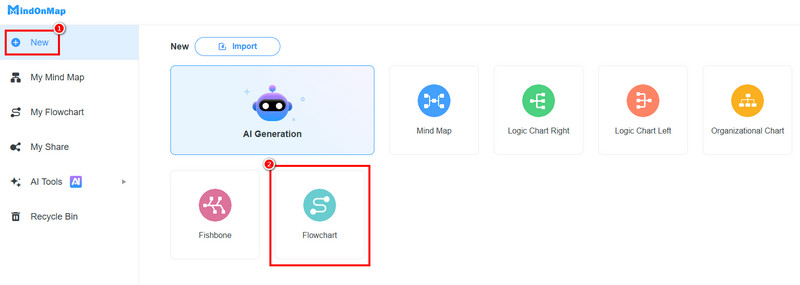
From the primary UI, hit the New section. Then select the Flowchart feature to start creating your diagram.
You can start structuring the job roles clearly. Go to the General section and access all the shapes you need. Then, double-left-click the shapes to insert information.
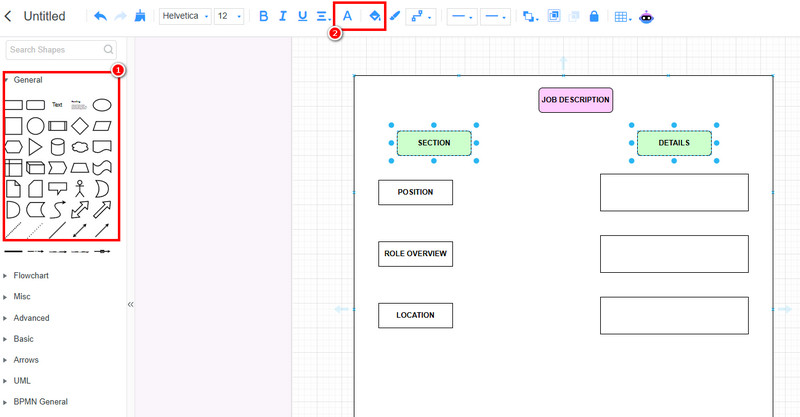
Use Font and Fill Color to add color to them.
Once you are done structuring job roles, you can tap the Save button to save them on your MindOnMap account. You can also use the Share and Export options to share and save the diagram on your device.
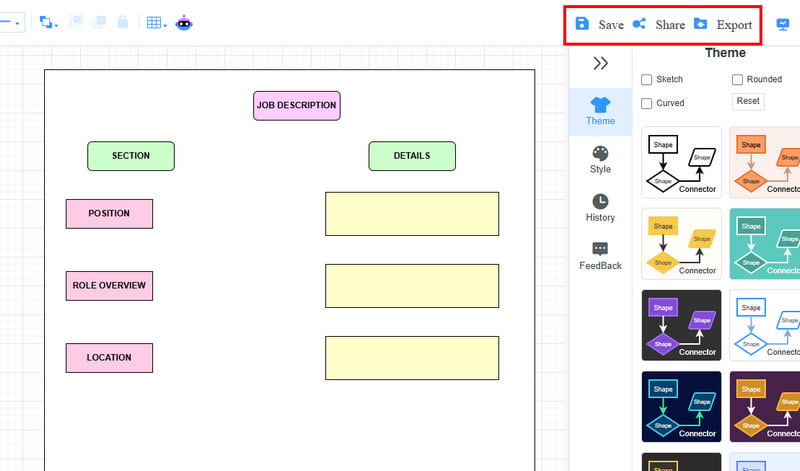
Click here to see the entire job description designed by MidnOnMap.
Creating a clear job identification sample can make recruitment planning more organized and efficient. With MindOnMap, you can easily visualize roles, responsibilities, and required skills in a structured way. Whether you are creating a job chart, organizational diagram, or even want to make a family tree for different relationships and connections, this tool provides a simple and flexible way to present information clearly.
Part 5. FAQs about Job Description
What is a job scope format?
It is a structured framework or outline that shows the boundaries and expectations of a particular role within the company or organization. In this format, you will see the required skills, responsibilities, and qualifications.
Is the job description always necessary?
Definitely, yes. It is the best way for the candidate or employee to see all the information they need, especially when looking for a career or a job.
Can a job description change over time?
It is possible. A manager or recruiter can change the job description as the organization's needs evolve, or the roles expand. Changing and reviewing the job description ensures that everything will be relevant and accurate.
Conclusion
Now, you have learned what a job description is, along with its key components and its importance. You even learned how to structure job roles clearly, thanks to the help of MindOnMap. With its helpful features, you can smoothly define skill requirements, organize responsibilities, and improve hiring clarity. Thus, always rely on this tool and achieve your main objectives.