What is Nominal Group Technique: Descriptions and Key Steps
Nominal Group Technique, NGT, is a structured method for generating ideas and reaching consensus in group decision-making. It encourages equal participation by collecting individual brainstorming with group discussion and ranking insights. This approach helps groups prioritize solutions effectively while minimizing bias and dominance in conversations. If you want to learn more about Nominal Group Technique, read this article. We'll cover its description, benefits, key steps, and challenges. You will also discover the best tool to help you organize your ideas. To learn more, start reading this post.

- Part 1. What is Nominal Group Technique
- Part 2. Benefits of Nominal Group Technique
- Part 3. Key Steps in the Nominal Group Technique
- Part 4. Common Challenges in Group Decision-Making
- Part 5. Best Tool to Organize Group Ideas
- Part 6. FAQs about Nominal Group Technique
Part 1. What is Nominal Group Technique
The Nominal Group Technique, also known as NGT, is a structured decision-making procedure. It is designed to encourage balanced participation and insight generation within the groups. It also involves individuals brainstorming independently first, then sharing ideas in a round-robin manner. This way, all voices are heard. After the process and clarification, the group ranks or votes on the ideas, letting them prioritize solutions objectively. This procedure reduces bias and gives each member a chance to share insights during the discussion, which can lead to a more effective outcome.
Part 2. Benefits of Nominal Group Technique
After learning the definition of Nominal Group Technique, we can now move on to the benefits you can get from using the approach. To explore more about its benefits, read all the information in this section.
Enhances Insight Quality and Quantity
One benefit of NGT is that it improves idea quality and quantity. Because brainstorming starts independently, each member can think freely without interruption or judgment. This can produce a wider range of creative, diverse insights. When discussed collectively, the entire group benefits from both refinement and originality.
Facilitate Clear Prioritization
Nominal Group Technique incorporates voting and ranking. It helps all the members identify the most valuable solutions to a certain problem. This approach reduces confusion and ensures decisions are based on collective agreement. It can also help the group move forward with confidence and clarity.
Encourages Equal Participation
One advantage of the Nominal Group Technique is that it allows equal participation. During a brainstorming session, each group member has the chance to share ideas that can help solve a problem. Using a round-robin format lets all members, even the quiet ones, contribute. This can also lead to a more inclusive and balanced decision-making process and provide a structured approach that complements other decision-making models.
Part 3. Key Steps in the Nominal Group Technique
The Nominal Group Technique PMP offers a clear structure for moving from individual insight generation to collective decision-making. To learn everything about the key steps in NGT, read all the details below.
Step 1. Generate Insights/Idea
The first step is to generate ideas. Each member must brainstorm and write down all the ideas without any influence from the group. This ensures no bias and supports originality.
Step 2. Discuss the Idea
After generating ideas, the next step is to discuss them. Share all ideas in a structured way using the round-robin format. It lets all members present without interruption. Then, the whole group discusses and clarifies the ideas to ensure everyone understands them. This step can help eliminate ambiguity and refine concepts.
Step 3. Proceed to Voting
After the discussion, the group will vote. All group members will rank and vote on the presented ideas. This process is usually anonymous to avoid influence or peer pressure. Voting ensures decisions reflect genuine preferences rather than group dynamics.
Step 4. Prioritization
After voting, the next step is to tally the votes. This way, you can identify the most favored idea or solution. Then, the group will focus on the top-ranked insights for action or further development. Prioritization ensures clarity and consensus in decision-making.
Part 4. Common Challenges in Group Decision-Making
Group decision-making also comes with challenges you may encounter. Some of the challenges are:
- • Information Overload– When there is too much data, teams might struggle to identify what is truly relevant. It can also slow the process and lead to confusion.
- • Uncertainty – Limited clarity about future outcomes often causes hesitation. Teams may avoid bold decisions for fear of negative consequences.
- • Conflicting Objectives – Different stakeholders may have competing interests. This can make it difficult to reach a balanced solution that addresses the problem.
- • Time Pressure – Urgent situations can force rushed decisions. Without proper analysis, teams might offer a poor or ineffective solution to a specific problem. Applying practical time management tips can help teams allocate enough time for analysis while still making timely decisions.
- • Lack of Resources – Limited resources, such as budget, manpower, or technology, can limit feasible options. Teams may settle for less effective solutions due to these limitations.
Part 5. Best Tool to Organize Group Ideas
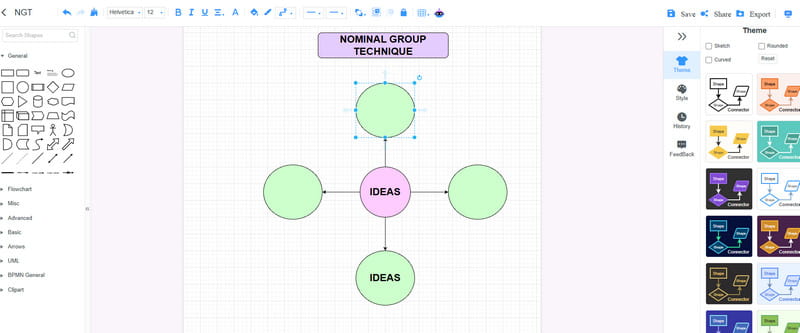
Looking for the best tool to help you organize group ideas? In that case, we suggest using MindOnMap Flowchart Creator. This visual presentation maker is ideal since it has all the features you need. It lets you use various shapes, colors, connecting lines, arrows, and more. You can also create an appealing output since it offers Theme and Styles features. We like that organizing ideas is simple, thanks to its comprehensive user interface. With this tool, you can:
- • Collect Suggestions– Each team member can add ideas directly to the map. It ensures all voices and ideas are captured without getting lost.
- • Rank Priorities – MindOnMap also lets the team highlight and organize ideas by importance, making it easier to identify which action should come first.
- • Visualize Outcomes – By turning ideas into diagrams, MindOnMap shows how decisions connect to results, helping the team see the bigger picture and anticipate impacts. This can also make the entire solution comprehensive.
Secure Download
Secure Download
Part 6. FAQs about the Nervous System Mind Map
When to use Nominal Group Technique?
You can use NGT if you want to prioritize ideas, solve certain complicated problems, or make decisions that require consensus. The approach is also ideal for project management, stakeholder engagement, and risk assessment.
What are the limitations of Nominal Group Technique?
NGT has several limitations and drawbacks. It can be time-consuming, especially with large groups, because it requires input from each member. A skilled facilitator is also necessary to manage the process. It may also not be ideal for highly creative or free-flowing brainstorming sessions.
What is the best tool to use when using NGT?
Since you are collecting ideas from the entire group, it's best to use MindOnMap Flowchart Creator. This tool lets you use various elements, like shapes, text, lines, and more. This way, you can instantly organize all the information in a well-structured manner.
Conclusion
Thanks to this post, you have learned everything about the Nominal Group Technique. You have explored its benefits, key steps, and common challenges. You even discovered MindOnMap Flowchart Creator as an exceptional tool for organizing ideas. For more insights, use this post as your go-to reference.