Plan Do Check Act: Everything You Need to Know about PDCA
The Plan-Do-Check-Act cycle, also known as PDCA, is a structured, four-step process designed to drive continuous improvement in methods and problem-solving. Plus, it is about emphasizing careful planning, practical execution, critical evaluation, and iterative adjustment. With this cycle, individuals or groups can refine strategies, deal with inefficiencies, and obtain sustainable progress. In this post, we are going to dig deeper into PDCA and its importance. After that, you will also learn how to organize all the information in a comprehensive, well-structured manner. Thus, read this post and learn more about PDCA.

- Part 1. An Introduction to Plan-Do-Check-Act and Why it Matters
- Part 2. Detailed Analysis of PDCA
- Part 3. Organize All the Information Using MindOnMap
- Part 4. FAQs about Plan Do Check Act
Part 1. An Introduction to Plan-Do-Check-Act and Why it Matters
What is a PDCA? Well, a Plan-Do-Check-Act cycle is a four-step process used to enhance systems, refine workflows, and solve problems. It starts with planning, where goals and strategies are defined, followed by doing, which is about implementing the plan on a small scale. After that, the next process is checking where results are measured and compared against expectations. The last process is acting. These adjustments are based on findings to standardize improvements or restart the cycle of further refinement.
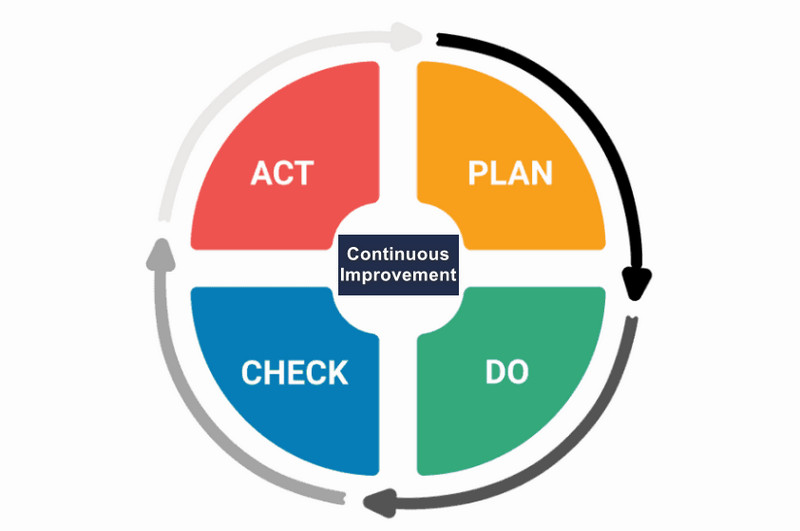
W. Edwards Deming popularized this technique. He has emerged as a key figure in quality control and ongoing development. Its simplicity and versatility make it valuable in a variety of fields, including manufacturing, healthcare, education, and even individual productivity. Organizations and individuals can methodically find inefficiencies, test fixes, and incorporate long-lasting improvements into their operations by going through these phases repeatedly.
Why Does it Matter?
After knowing what a Plan-Do-Check-Act cycle is, maybe you wonder why it matters. The PDCA matters since it can provide a structured yet flexible framework for continuous learning and improvement. In addition to that, instead of relying on one-time fixes, the PDCA encourages organizations and individuals to test ideas, refine strategies, and evaluate outcomes in a repeatable loop. This lessens the risks, fosters innovation, and enhances efficiency by ensuring decisions are based on evidence rather than assumptions. Overall, we can tell that PDCA can build a culture of accountability and adaptability, letting teams respond effectively to challenges and motivating sustainable progress.
Part 2. Detailed Analysis of PDCA
Want to learn more about PDCA? Then, you can check all the details from this section.
Plan - Set Objectives and Plan Actions
This stage involves determining the problem or opportunity and identifying clear objectives. An individual or a team analyzes the current process, designs a strategy, and gathers information to achieve measurable improvements. The planning stage sets the foundation by outlining timelines, resources, and responsibilities, ensuring that actions are aligned and purposeful with goals.
Do - Execute the Plan
For the next phase, you can start executing the plan. This process is often on a small scale to minimize risk. Plus, execution should follow the plan closely. This is ideal to make the process structured and aligned with the plan.
Check - Review Result
The next process is checking. In this phase, the results are measured against the goal set in the planning phase. Information is analyzed to identify whether the plan achieved the preferred result, highlighting successes and uncovering gaps. Plus, this emphasizes evidence-based evaluation rather than assumptions. It is to ensure that decisions are grounded in facts.
Act - Adjust and Improve
Changes are made to enhance the process based on the results. Improvements are standardized and scaled if the strategy was successful; if not, a new cycle is informed by the lessons learned. By incorporating input into subsequent activities, this stage guarantees ongoing progress.
Application of PDCA
The Plan-Do-Check-Act cycle is widely applied across various domains. In workflow, PDCA helps in streamlining tasks and eliminating inefficiencies. It can also be applied in quality management. It ensures service standards and a consistent product by embedding improvement loops. You can also apply the PDCA cycle to personal projects. It provides a structured way to set objectives, refine habits, and test approaches, making it an ideal tool for both personal and professional growth.
Part 3. Organize All the Information Using MindOnMap
Seeing all the information in a text form might be boring. So, if you want to organize the information about PDCA in a better, well-structured way, the best thing to do is to use other elements, like shapes, colors, lines, and more. Thankfully, MindOnMap Flowchart Maker can offer all the features you need. This tool is perfect since it can give you all the elements you need. What makes it more helpful is that you can access templates, styles, and themes, letting you create an appealing structure. Plus, you can also save your final work in various formats like JPG, PNG, SVG, PDF, and more. Thus, if you want to start organizing all the information about PDCA, you can use the simple instructions below.
First, you have to download MindOnMap on your desktop. You can also tap the download buttons below to instantly access the program. After that, start creating your account.
Secure Download
Secure Download
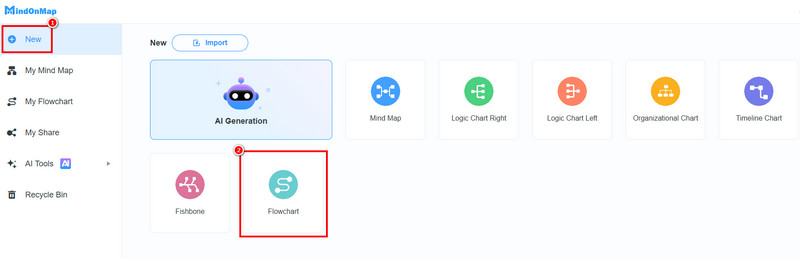
For the next step, hit the New section from the primary interface. Then, use the Flowchart feature to open the tool's main interface.
You can start organizing all the information about PDCA. Go to the General section and access all the shapes you need. Double-click the shapes to insert the information.
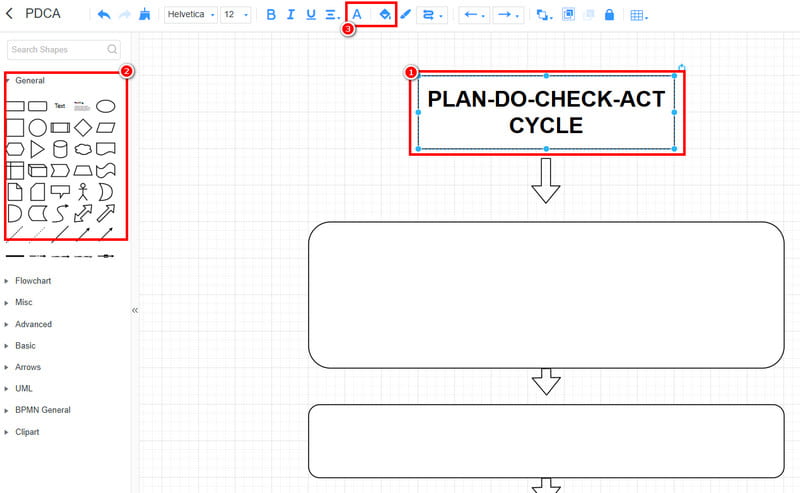
You can also access the Font and Fill options to add color to the shapes and fonts.
After you have organized all the information, start clicking the Save button to save the final work. Then hit the Export function to save the well-structured information.
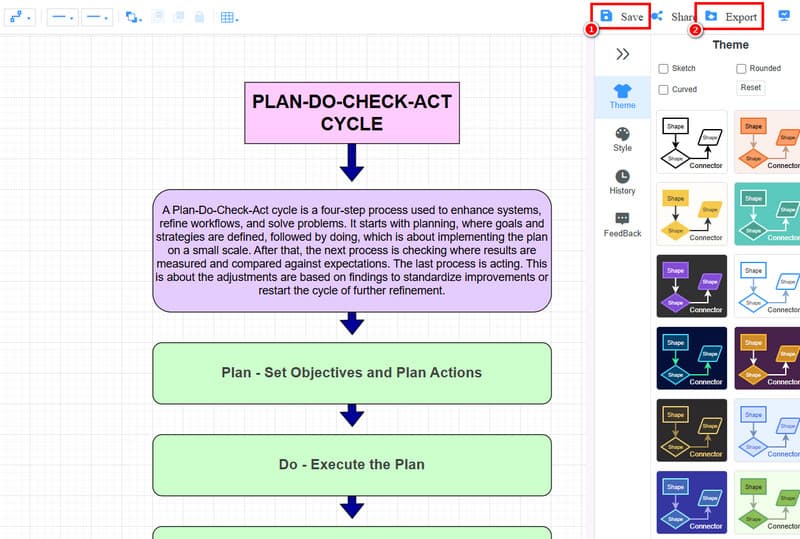
Click here to see the complete information about PDCA designed by MindOnMap.
Thanks to this method, you have learned how to organize all the data about PDCA using MindOnMap. You can even use various elements for an ideal and appealing result. Thus, always rely on this tool and achieve your preferred result. In addition, MindOnMap can also be used to create planning flowcharts, such as a calisthenics workout plan, helping you clearly organize your workout routines, exercise arrangements, and daily fitness goals.
Part 4. FAQs about Plan Do Check Act
Why is PDCA important?
PDCA is important since it promotes continuous improvement by repeating the cycle. It can even help organizations to avoid recurring mistakes.
When to use the PDCA cycle?
You can use PDCA in many ways. It is ideal for starting new improvement projects, re-designing processes, determining repetitive work processes, and more.
How does PDCA differ from normal problem-solving?
The PDCA emphasizes feedback loops and iteration. On the other hand, normal or traditional problem-solving often seeks a one-time fix.
Conclusion
The The Plan-Do-Check-Act cycle remains among the most practical and enduring frameworks for continuous improvement. Thanks to this post, you have learned all the information you need. Plus, if you want to organize all the information about PDCA, we suggest using MindOnMap. This tool ensures that you can use all the elements you need to organize all the information in a well-structured manner, making the tool powerful and reliable.