Definition of Resource Allocation and Its Importance
Resource Allocation is a procedure of distributing available resources. It includes money, time, equipment, and people. It involves distributing these assets across various tasks and projects in a way that maximizes both effectiveness and efficiency. It ensures that all activities get the support they need while avoiding bottlenecks. If you want to learn more about resource allocation, this post is perfect for you. We are here to offer a complete description, types, methods, and other information. So, let's dive into how you can master your assets and keep your projects on track.

- Part 1. Introduction to Resource Allocation
- Part 2. Types of Resources
- Part 3. Resource Allocation Methods and Strategies
- Part 4. Common Challenges and Solutions in Resource Allocation
- Part 5. Organize All the Information Using MindOnMap
- Part 6. FAQs about Resource Allocation
Part 1. Introduction to Resource Allocation
What is Resource Allocation?
At its core, resource allocation is the art of making sure your limited assets (like your team's time and your project's budget) are in the right place at the right time. Think of it as the ultimate waste-reduction strategy for your business. Teams can stay on course and make greater use of their resources by carefully planning.
Additionally, resource allocation is about making a smart choice with what's available. It needs understanding project needs, balancing priorities, and adjusting to changing situations. Once the procedure is successful, it improves productivity, maintains project management smoothly and helps companies/businesses reach their goals without any delays.
Why Resource Allocation Matters?
Resource Allocation System matters since it ensures that limited resources are used most effectively to reach the desired objectives. Projects may experience delays, lost effort, or even collapse as a result of shortages or poor management if they are not properly allocated. Organizations/businesses may increase productivity, cut expenses, and provide better results by setting priorities and allocating resources sensibly.
Part 2. Types of Resources
Check this section and explore the types of resources.
Human Resources
One of the types of resources is Human Resources. These are the people who do the work. It includes specialists, contractors, and employees. Their knowledge, efforts, and skills are necessary to complete the task and achieve project objectives. Effective allocation isn't just about 'filling slots'; it's about matching the right skills to the right roles to prevent burnout and keep momentum high.
Time
One of the most limited resources in any project is Time. Proper time allocation can guide and help teams meet deadlines and avoid last-minute rushes. In addition to that, when managed well, it allows smoother workflows and reduces stress. It is to ensure that the tasks are completed at a steady pace.
Budget
The budget is always included in resources. It represents the financial resources available for a project. Allocating the funds appropriately prevents overspending. It also ensures that the money is directed toward the most important needs. Aside from that, a well-managed budget supports cost efficiency and helps businesses or organizations stay financially stable while achieving their objectives.
Tools and Equipment
These include both digital tools like software and apps, as well as tangible objects like equipment and office supplies. Having the appropriate equipment guarantees that work may be done effectively and at a high standard. In order to prevent delays and improve overall performance, proper allocation entails giving teams the equipment they require at the appropriate moment.
Part 3. Resource Allocation Methods and Strategies
Come here and see the breakdown of the resource allocation methods and strategies.
Methods
Priority-Based Allocation
Resources are provided first to the most important task. It is to ensure that the critical work gets done on time.
Cost-Benefit Analysis
Decisions are made by comparing the benefits and value of the task against the resources required.
Resource Leveling
The work is distributed equally to prevent individuals or teams from being overworked, maintaining a balanced workload.
Optimization Models
This is where data takes the wheel. By using planning tools or historical data, you can ensure every asset is squeezed for maximum value.
Strategies
Risk-Based Allocation
More resources are directed to areas with bigger potential impact or higher risks.
Flexible Allocation
Resources can be adjusted as project needs change. Keeping things adaptable.
Clear communication
To prevent misunderstandings and enhance cooperation, teams are informed about resource decisions.
Frequent monitoring
In order to reallocate resources if necessary, progress is often reviewed.
Use of Project Management Tools
Software keeps everything organized by tracking resources, due dates, and workloads.
Part 4. Common Challenges and Solutions in Resource Allocation
After learning the meaning of resource allocation, you can now proceed to the common challenges and solutions.
Challenges
Changing Priorities
Tasks or projects may shift focus, leaving some under-resourced.
Limited Resources
Organizations often lack people, money, and time to cover every task.
Overallocation
If there are too many projects or tasks assigned at once, members might become overloaded.
Poor Communication
Another challenge you might encounter is poor communication, which can cause conflicts and delays.
Solutions
Create a Clear Priorities
Focus resources on the most important task first. It is ideal to avoid spreading them too thin.
Stay Flexible
You can adjust the resource allocation as projects need to change to keep things balanced.
Use Project Management Tools
Using a management tool allows you to keep the workflows on track. It can also let you view everything, such as team, budget, and let you identify problems instantly.
Encourage Communication
Always keep your team informed to minimize misunderstandings.
Part 5. Organize All the Information Using MindOnMap
Let's be honest, staring at a wall of text about Resource Allocation can get overwhelming. To truly see where your resources are going, you need a visual roadmap. This is where MindOnMap Flowchart Creator shines. Instead of listing your priorities, you can map them out in a flowchart that shows exactly how your team, budget, and deadlines all fit together. This tool is ideal since it helps you turn your text into a diagram or chart effectively. You can even access more tools, including the flowchart maker, shapes, colors, font styles, themes, and more, ensuring that you can achieve the result you want after the process. You can also access various templates for an easier organization process. The best part here is that its UI is simple, making it perfect for all users. If you want to start organizing all the information about resource allocation, you can follow the steps below.
Access MindOnMap on your desktop or browser. Then, you can create your account to begin the process.
Secure Download
Secure Download
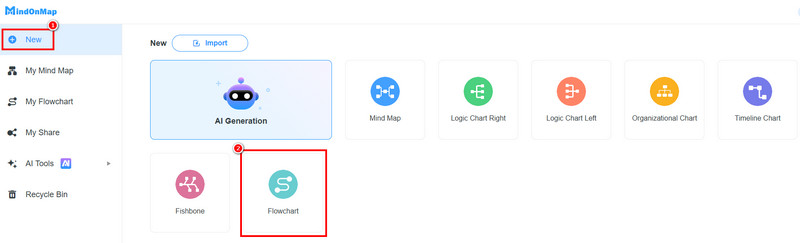
Proceed to the left interface and hit New. Then, choose and click the Flowchart feature to load the main interface.
You can start organizing all the information about Resource Allocation. You can start using various shapes from the General section. Double-tap the shapes to insert the text inside.
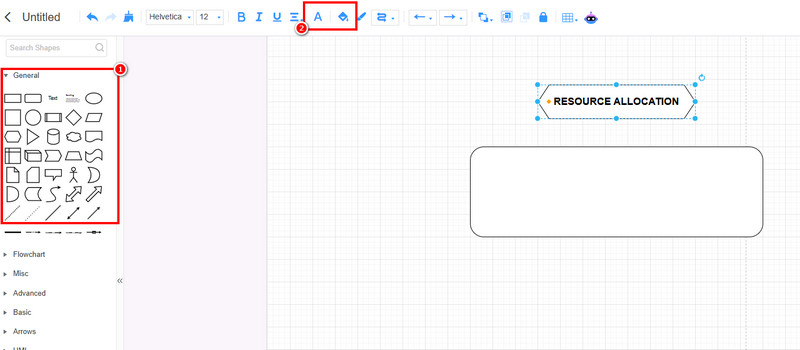
To make your chart colorful, you can rely on the Fill and Font Color feature above.
Once you are done, you can tap Save to start saving the chart to your account. You can also share its link by clicking the Share button.
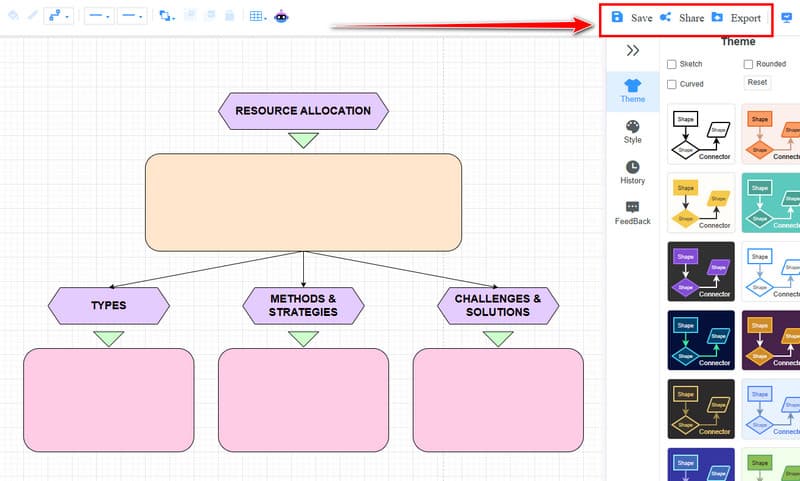
Tap Export to save the visual on our device.
Click here to see the best visual designed by MindOnMap.
Part 6. FAQs about Resource Allocation
What are the 3 ways to allocate resources?
The three ways to allocate resources are priority-based allocation, equal distribution, and flexible allocation.
What tools can help with resource allocation?
Resource allocation tools help teams plan workloads, track resources, and manage projects. Common options include project management software and visual planning tools like MindOnMap.
Why is resource allocation important?
Resource allocation helps businesses use limited resources effectively, improve productivity, reduce costs, and complete projects on time.
Can resource allocation change during a project?
Yes. Resources can be allocated as priorities shift or new challenges arise.
How does resource allocation affect productivity?
Proper allocation ensures that workloads are balanced, teams can focus on the most crucial task, and deadlines are met.
Conclusion
This article already shows you all the knowledge you need about Resource Allocation. You have explored its types, importance, methods, strategies, common challenges, and solutions. Plus, if you want to turn the information into a comprehensive, well-structured visual, you can access MindOnMap. This tool ensures that you can achieve the result you want after the organization process, making it a reliable tool for all users.