What is Critical Path Method: A Way to Effective Projects
The Critical Path Method or CPM is an important project management method we can always use to plan, schedule, and control our complex projects effectively and efficiently. These methods can easily help us identify the longest sequence of dependent tasks and easily determine the overall project duration. This article explains the Critical Path Method, key concepts, step-by-step calculation process, benefits, and limitations. It also explores practical applications and shows how tools like MindOnMap can be used to create clear CPM diagrams for better project visualization and management.

- Part 1: What Is the Critical Path Method
- Part 2: Key Concepts of CPM
- Part 3: Steps to Calculate the Critical Path
- Part 4: Benefits and Limitations of CPM
- Part 5: Use MindOnMap to Create a CPM Diagram
- FAQs about Critical Path Method
Quick Answer: The Critical Path Method (CPM) is a project management technique used to identify the longest sequence of dependent tasks that determines the minimum time needed to complete a project. By analyzing task durations and dependencies, project managers can also use PERT charts to visualize task dependencies and estimate project duration when planning complex projects.
Part 1: What Is the Critical Path Method
What Is the Critical Path Method
Critical Path Method or CPM is a project management tool that we can use to develop a precise project timeline.Sometimes this method is referred to as Critical Path Analysis or CPA. This method will require you to use the critical path diagram to graphically depict a project's work sequences. The algorithm it provides can be used to determine the crucial path after various task sequences or paths have been specified.
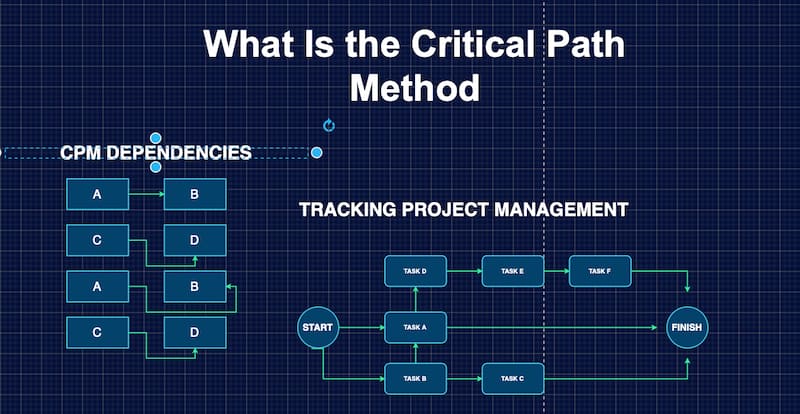
Why Is the Critical Path Method Important in Project Management?
The Critical Path Method (CPM) helps project managers identify the longest sequence of dependent tasks that determines the shortest possible project completion time. It also shows which tasks have little or no scheduling flexibility.
Tasks on the critical path are especially important because delays in these activities can delay the entire project. By identifying the critical path, project managers can:
- • Estimate the minimum time required to complete the project.
- • Determine the duration of each task.
- • Identify activities that require close monitoring.
- • Understand task dependencies and potential scheduling risks.
- • Prioritize work and develop more realistic project schedules.
Part 2: Key Concepts of Critical Path Method
Tasks
Tasks are the individual activities that must be completed to finish a project. Each task has a specific duration and contributes to the overall project goal. The following are the key example:
- • Research.
- • Design.
- • Development.
- • Testing.
- • Deployment.
Dependencies
Dependencies show the relationship between tasks and determine the order in which they must be completed. Some tasks cannot start until others are finished. A concrete example is, when testing can only begin after development is completed. A Gantt chart for project management can help teams visualize task schedules, dependencies, milestones, and deadlines.
Timeline
The timeline is the project schedule that outlines when tasks start and finish. It helps teams track progress and meet deadlines efficiently. For example, a project scheduled to run from June 1 to July 31.
Critical Path
The critical path is the longest sequence of dependent tasks that determines the minimum time required to complete a project. Any delay in a critical path task will delay the entire project.
- • Planning.
- • Design.
- • Development.
- • Testing.
- • Launch.
Part 3: Steps to Calculate the Critical Path
The Critical Path Method helps project managers determine the minimum time needed to complete a project by analyzing task durations and dependencies. Follow these five steps to calculate the critical path.
Identify all project tasks.
List every activity required to complete the project. For example, a website development project may include research, design, content preparation, development, testing, and launch.
Determine task dependencies.
Identify which tasks must be completed before others can begin. For example, development may depend on design approval, while testing cannot begin until development is complete.
Estimate the duration of each task.
Estimate how long each activity will take. Use days or weeks as consistent units throughout the calculation.
Create a project network diagram.
Draw each task as a node and connect the nodes according to their dependencies. This diagram helps you visualize parallel activities and the order in which tasks must be completed.
Calculate the critical path.
Calculate the earliest start and finish times for each task, then determine the duration of each complete path through the network. The longest path is the critical path, and its total duration determines the minimum project completion time, assuming the task durations and dependencies remain unchanged.
Worked Example: Calculating a Website Project's Critical Path
Suppose a team is planning a small website project. The project includes five tasks with the following durations and dependencies.
| Task | Activity | Duration | Depends On |
| A | Research | 2 days | None |
| B | Design | 3 days | A |
| C | Prepare Content | 2 days | A |
| D | Development | 4 days | B |
| E | Final Review | 2 days | C and D |
Identify the possible paths.
The project has two main paths:
- Path 1: A → B → D → E
- Path 2: A → C → E
Calculate each path's duration.
- Path 1: 2 + 3 + 4 + 2 = 11 days
- Path 2: 2 + 2 + 2 = 6 days
Because Task E depends on both C and D, it cannot begin until both tasks are complete. Development (Task D) finishes later than content preparation (Task C), so the team must wait for development to finish before starting the final review.
Identify the critical path.
The critical path is A → B → D → E, with a total duration of 11 days.
This means the website project requires at least 11 days to complete under the given assumptions. Delaying any task on this critical path will delay the project unless the schedule is adjusted. The content preparation task has some scheduling flexibility because it can finish before development is complete.
This example shows how CPM helps project managers identify essential tasks, understand parallel work, and focus their attention on activities that directly affect the completion date.
Part 4: Benefits and Limitations of CPM
PROS
- Better Planning: It arranges your project activities in a precise manner and organizes a timetable.
- Improved Time Management: Identifies important tasks that have a direct impact on project completion.
- Effective Resource Allocation: Assists in setting priorities for critical tasks.
- Early Risk Detection: Identifies any delays before they have an effect on the project.
- Improved Project Control: Facilitates progress tracking and milestone monitoring.
CONS
- Time Estimation Difficulties: It can be affected by inaccurate estimations of durations.
- Regular Updates: Schedules must be updated on a regular basis in order to maintain accuracy.
- Limited Flexibility: The critical path may need to be recalculated if the project's scope changes.
- Overlooked Resource Constraints: Prioritizes job sequencing above resource availability.
Verdict
Project managers can plan, schedule, and monitor tasks with the aid of the Critical Path Method or CPM to guarantee that projects are finished on schedule. Although it increases productivity and pinpoints important tasks, its continued efficacy depends on precise estimations and frequent updates.
Part 5: Use MindOnMap to Create a CPM Diagram
We learned the importance of a Critical Path Method in project management. Now, we shall now give you a great tool that can help you create a diagram showcasing the method in a visually appealing way possible. MindOnMap helps professionals in creating mind maps and diagrams that can be used in managing different aspects of business. In this case, a project. See how we can use it creating Visual Dependencies and Tack Project Progress. Download MindOnMap now and install it on your computer for free.
Secure Download
Secure Download
Open the tool and access the Flowchart feature.

Add Shapes that can represent your dependencies and arrange them according to the structure you prefer.
After that add Text to label each dependency and add more details on it.
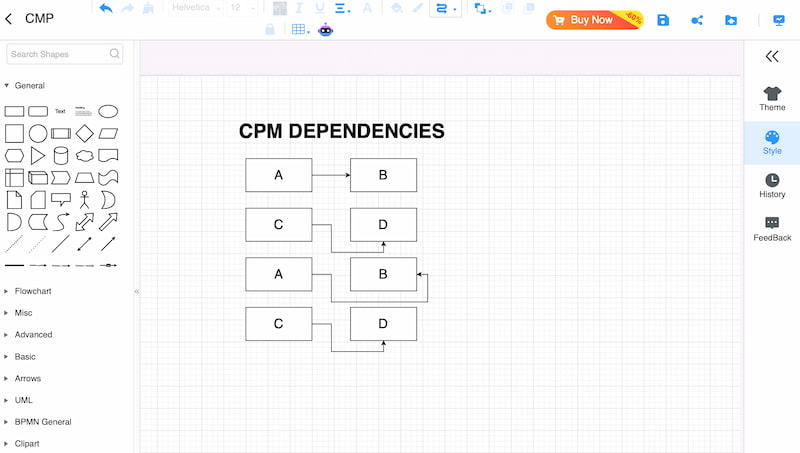
Let us now Track Project Progress by adding more Shapes with the same canvas and layout the structure in your preference again.
Add details using Text and allow the flow to be managed by you.
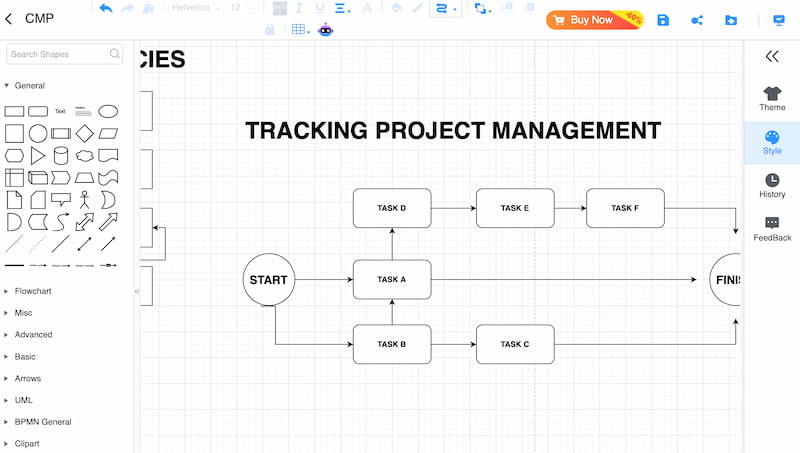
See, MindOnMap really provides every element you need in creating a Critical Path diagram. All you need to do now is manage your sequences properly in accordance with your needs and you will be good to go.
FAQs about Critical Path Method
Who uses the Critical Path Method?
CPM for scheduling and project control can be used by project managers, engineers, construction planners, IT developers, and event coordinators.
What tools are used for CPM?
Common tools include Microsoft Project, Excel spreadsheets, and network diagram software used for planning and scheduling projects efficiently.
Can my project have more than one critical path?
Yes. Your projects may have multiple critical paths when different task sequences share identical longest completion durations simultaneously.
What is a project network diagram in CPM?
Project Network Diagram in Critical Path Method is the visual representation of project tasks, dependencies, and sequence relationships. These are used to identify critical paths and project duration.
Why is the Critical Path important to us?
Critical Path matters because it can identify our tasks affecting project deadlines, avoiding delays, helping managers and staff in prioritizing their work, and ensuring a timely project completion efficiently and effectively.
Conclusion
We can now conclude that the Critical Path Method matters in terms of managing our project. Above this article, we defined every detail you need to know about it. In addition, MindOnMap really gave the best features in order to help you create a Critical Path Method diagram. Use it for free and manage every project you have with ease.