Defining SMART Goal, Its Usage, and Procedure to Do It
Having a goal in everything we do and we want to achieve is important. It serves as a destination and a roadmap for us to easily be where we want to be. One of the popular methods for setting a goal for students, business personnel, marketing strategies, and more is the amazing SMART goal method. In line with that, this article exists to help you understand what the meaning and definition of a SMART goal map is and how we can easily draw it using the best free tool. All of this important information is here, so better to start reading now to discover.

- Part 1: Introduction to SMART Goals
- Part 2: Breakdown of SMART Criteria
- Part 3: How to Set SMART Goals Step by Step
- Part 4: Common Mistakes When Setting Goals
- Part 5: Draw a Smart Goal MindMap by Using MindOnMap
- FAQs about Smart Goal Map
Part 1: Introduction to SMART Goals
What Are SMART Goals?
Let us start this article by defining what a SMART goal means. This goal map is a structured way of setting your objectives so they are clear and achievable for your end. The acronym SMART stands for Specific, Measurable, Achievable, Relevant, and Time-bound.
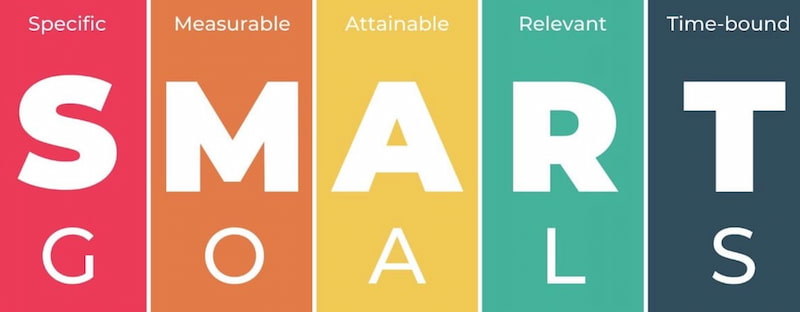
- • Specific. Simply means that you have a clearly definition of what you want to accomplish
- • Measurable. This element includes criteria that you can use to track your progress towards achieving your goal.
- • Achievable. This element helps you to make sure the goal is realistic and attainable with the resources you have.
- • Relevant. This is where you also align the goal with your broader priorities to have a great purpose.
- • Time-bound. Lastly, this is where you set a timeframe for completing the goal you just set.
Why SMART Goals Are Effective
SMART goal maps are very effective and can work well because they give us abstract ideas that can turn into actionable plans. In simple terms, SMART goals exist to increase the chances of success of our goal by giving us a clear roadmap instead of just a general intention. To be specific, SMART goals can:
- • Provide us with clarity and help us be more focused. This leads to knowing exactly what to do.
- • Through this, you can make it easier to measure your progress and keep you motivated.
- • The map is a great help in staying realistic. This can reduce frustration or burnout.
- • Make every effort to align with your priorities.
- • It can create a sense of urgency through deadlines.
Part 2: Breakdown of SMART Criteria
| Criteria | Guide Questions to Ask | Example |
| Specific | ● What do I want? ● Who is involved? ● Where? | Improve graphic design skills using Adobe Photoshop. |
| Measurable | ● How much? ● How many? ● How will I know it’s done? | Complete 5 design projects this month. |
| Achievable | Is this realistic for me right now? | Learn basic design principles within 1 month. |
| Relevant | Why is this important to me? | Learn design to qualify for a multimedia assistant role. |
| Time‑bound | When will I complete this? | Finish portfolio within 2 weeks. |
Part 3: How to Set SMART Goals Step by Step
Here are a few steps you can follow in order to start your SMART Goal.
You need to begin with a general idea of what you want to achieve.
After that, you can easily clarify exactly what you want to accomplish.
Then, you can decide how you will track the progress of your goal.
Next, we need to ensure it is realistic based on the time and resources that you currently have.
Now, we need to connect it to your bigger goals. This is where we add relevant to the goal.
Give your goal a clear deadline.
Part 4: Common Mistakes When Setting Goals
| Mistake | Why It’s a Problem | Better Approach |
| Setting vague goals. | You will not have a clear direction. | Be specific about what you want. |
| No method to measure progress. | It will become hard to know if you are improving. | Add numbers or clear indicators. |
| Setting unrealistic goals. | It can lead you to frustration or burnout. | Keep goals achievable and practical. |
| Ignoring relevance. | Wastes time on things that do not matter. | Align goals with your priorities. |
| No deadline. | Causes procrastination. | Always set a timeframe. |
Part 5: Draw a Smart Goal MindMap by Using MindOnMap
What is MindOnMap
After knowing all the important details about the SMART goal, we hope you have a bigger picture of its importance in the field you are in. In part, we shall now guide you in creating your own map. Good thing MindOnMap exists because it can easily help us with the process. This tool is rich with features and elements that help users easily in creating the visual map for their goal. More than that, the tool already integrates AI technology that can help brainstorm details in one click. Indeed, MindOnMap exists to help us create SMART goals and other maps with ease to save time and be more efficient with our work or tasks.
Key Feature
- • Create mind maps in various formats, such as math mind maps.
- • AI integration process.
- • Wide options for elements and shapes.
- • Various file format output.
- • Free and easy interface.
How to Use MindOnMap to Create a SMART Goal
Get MindOnMap on its official website for free and install it immediately on your computer.
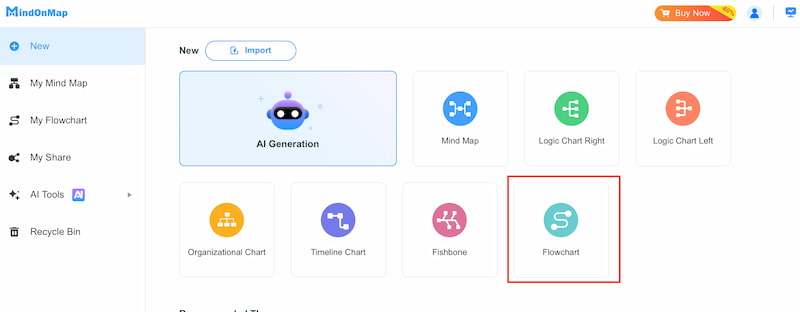
After that, access the main interface. From there, choose the Flowchart feature. This is a great choice that can help you build a SMART Goal map freely.
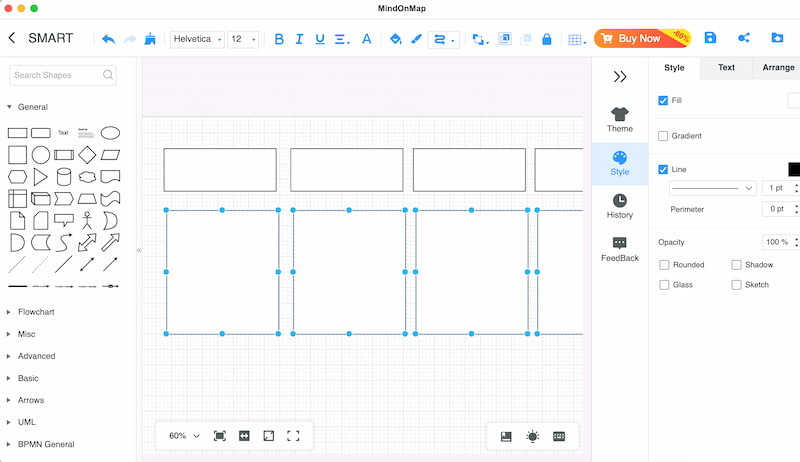
Use the Shapes now and start building the foundation of your map. Add as many shapes as you need.
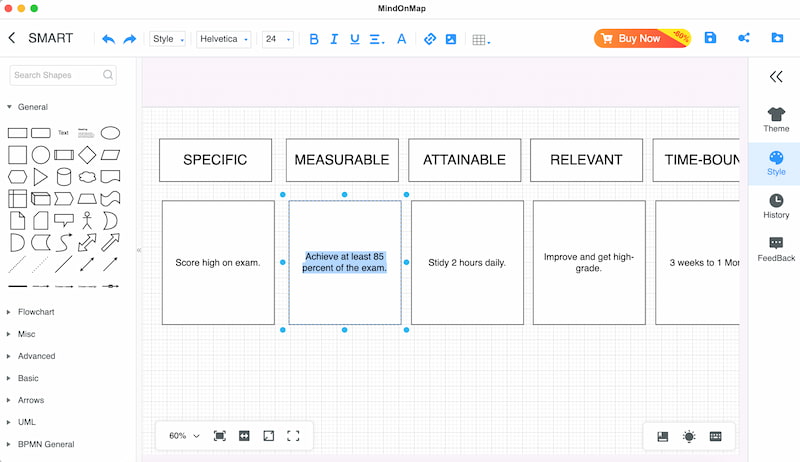
Then you can now add Text to add the details you need for your SMART Goal. It is important to double-check every detail to avoid mistakes.
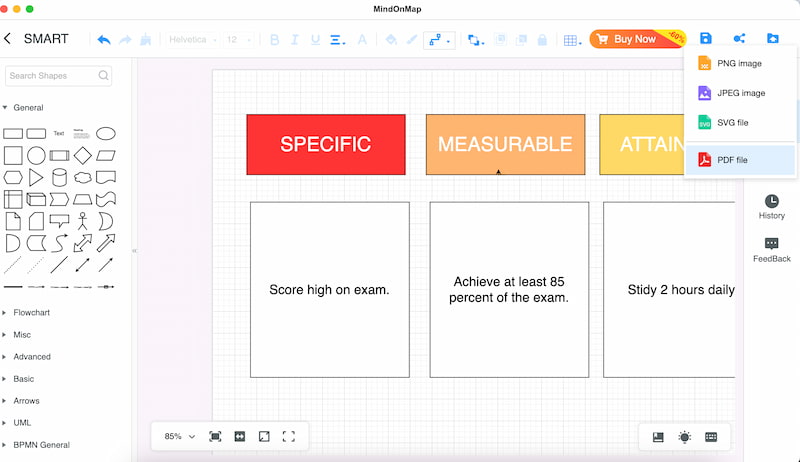
Let us now finalize your map by adding a color or Theme to set the final look and mood of your map. Lastly, click the Export button and choose the file format you need to save your map.
That is the power of MindOnMap. We can see that it is very easy to use and effective for creating detailed mind maps with all the information you need. Thus, even if you are just starting or have no background in graphics, MindOnMap works best for you.
FAQs about Smart Goal Map
Why are SMART goals important?
SMART goals are important because they can easily provide clear direction, improve your focus, track progress, increase motivation, and help you achieve realistic outcomes within a defined timeframe.
How do SMART goals improve productivity?
SMART goals break tasks into clear steps. This fact can make it easier for you to focus, manage time effectively, and measure consistent progress toward completion. All of these lead to great productivity.
Can SMART goals be used for professional or personal growth?
Yes. SMART goals are flexible and can be used for personal development, education, career planning, and achieving both short-term and long-term goals.
Conclusion
We can now conclude that having a clear direction for all of the goals we have is important to achieve them easily. The SMART Goal map is here to make us productive in achieving them. Good thing MIndOMap exists to make the process of creating a SMART goal visual with ease. Use it for free and easily.