Strategy Planning Model & How to Apply Strategic Planning
What is a strategic planning framework? Well, it is a structured approach that guides organizations/businesses to define and determine their primary vision, set clear objectives, and outline the methods needed to achieve them. It offers a roadmap for aligning processes, resources, and people toward long-term success while adapting to changes in the environment. So, if you want to learn more about strategic planning and models, read here and explore more.
- Part 1. What is Strategic Planning
- Part 2. Common Strategic Planning Frameworks
- Part 3. How to Choose the Right Framework
- Part 4. How to Apply Strategic Planning Models in Business
- Part 5. Use MindOnMap to Visualize Strategic Planning
- Part 6. FAQs about Strategic Planning Frameworks and Models
Part 1. What is Strategic Planning
Strategic planning is the procedure businesses and organizations use to define their long-term goal and determine the best path to achieve them. Strategic planning involves analyzing internal strengths and weaknesses, as well as opportunities and threats, to create a well-structured direction. By planning, an organization can align its resources and efforts toward a shared vision.
Additionally, this approach assists project/business leaders in allocating funds, establishing quantifiable goals that direct day-to-day operations, and setting priorities. Strategic planning guarantees that choices are in line with the overarching goal and flexible enough to accommodate environmental shifts. Lastly, it offers a road map that helps the company stay focused and ready for new challenges.
Part 2. Common Strategic Planning Frameworks
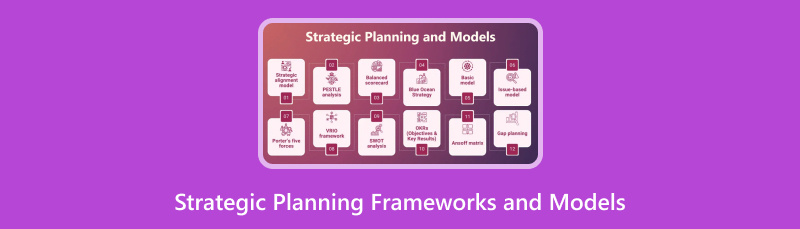
There are common strategic plan models you can use for better planning. To explore some of the best frameworks, you can read everything in this section.
SWOT Analysis
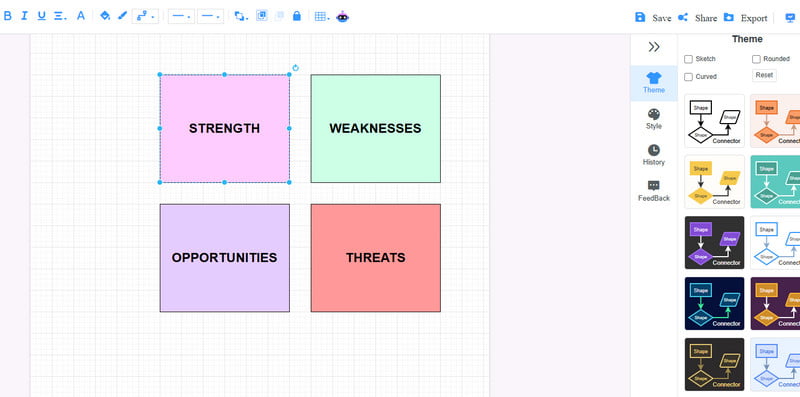
One of the best frameworks you can use for business is SWOT Analysis. It is a framework that analyzes and examines an organization's strengths, weaknesses, opportunities, and threats. It can help businesses to identify what they do well, the things they must change and improve, and how external factors may impact their success. With this strategic model, leaders can create strategies that leverage strengths and opportunities while dealing with risks.
PEST Analysis
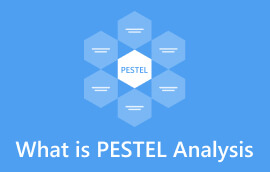
Another framework you can use is PEST Analysis. This model focuses on external macro-environmental factors. These are Political, Economic, Social, and Technological influences. It lets organizations anticipate changes in the environment that could affect operations or growth. The good part here is that this framework is easy to create, making it more ideal for all users and project leaders. It is even ideal for long-term planning and adapting to external pressure. Thus, if you want a good plan, you can try using this strategy model.
Porter's Five Forces
Porter's Five Forces analyzes the competitive forces within the industry. These are the buyer power, threat of new entrants, supplier power, competitive rivalry, and threat of substitution. It aids companies in comprehending the factors influencing competition and profitability. Organizations can identify strategic positions and create plans to obtain a competitive advantage by using this model.
Part 3. How to Choose the Right Framework
What strategic model is best? The main goal of your company, your sector, and the kinds of obstacles you encounter will determine which strategic planning framework is best. SWOT analysis is the best option for balancing strengths and opportunities while identifying weaknesses and threats, making it a realistic option if you need to assess internal capabilities and external hazards. PEST Analysis is more appropriate for businesses that operate in quickly evolving environments because it draws attention to outside factors like politics, economics, and technology that have the power to alter plans.
On the other hand, if your focus is on competition and market positioning, Porter's Five Forces is the best option. It provides deeper insights into industry dynamics and profitability drivers. Plus, the key is to match the framework with your decision-making needs, whether it's internal assessment, environmental scanning, or competitive analysis. By aligning the best tool with your strategic goals, you ensure that planning efforts are both relevant and actionable.
Part 4. How to Apply Strategic Planning Models in Business
Want to learn how to apply strategic planning models in business? If so, you can use the steps below.
Step 1. Define Objectives
You can start by clarifying your company's mission, vision, and long-term objectives. Plus, ensure that objectives are measurable and aligned with the strategy.
Step 2. Select the Framework
You can use an appropriate framework. You can use the SWOT Analysis, PEST Analysis, or Porter's Five Forces.
Step 3. Gather Information
You can start collecting internal and external information. You can study more on the market trends, competitor insights, and financials. When gathering data, ensure that you are using a reliable source.
Step 4. Analyze and Interpret
You can start analyzing and organizing the data using the framework. You can identify patterns, risks, and opportunities.
Step 5. Develop Action Plans
After organizing the information, you can create specific initiatives, responsibilities, and timelines. Ensure that plans are realistic and adaptable.
Step 6. Implement and Monitor
Execute that strategy across teams and departments. Also, always track the progress using regular reviews and KPI's. Adjusting the plan if needed is also suggested.
Part 5. Use MindOnMap to Visualize Strategic Planning
Do you want to create a strategic development framework to visualize strategic planning? In that case, we suggest using MindOnMap Flowchart Creator. This tool ensures that you can use all the elements you need, such as shapes, lines, colors, styles, themes, and more. Aside from that, you can effectively visualize your strategic plans since it can help you in many ways, such as:
Mapping Out Business Strategies
You can create a central node for your business's vision and branch out into key strategies. It includes growth, innovation, and customer engagement.
Compare Frameworks
MindOnMap can help you build separate branches for SWOT, PEST, and Porter's Five Forces. This way, you can insert all the key factors, such as strengths, weaknesses, opportunities, and other competitive forces.
Align Organization Goals
The tool can link strategies directly to organizational goals, like revenue growth, efficiency improvement, and market expansion.
With that, we can tell that MindOnMap is among the most reliable tools you can use to visualize your strategy plan.
Secure Download
Secure Download
Part 6. FAQs about Strategic Planning Framework and Models
Is creating a strategic framework easy?
It depends on the tool you are using. If you want to create a framework smoothly and easily, you can try MindOnMap. This tool can offer a simple layout with lots of elements, allowing you to visualize your plan without any issues.
Why is the Strategic planning model necessary?
A strategic model can provide clarity, direction, and consistency. It ensures that resources and efforts are aligned with the long-term goal.
Can multiple frameworks be used together?
Absolutely, yes. Combining frameworks would be ideal since it can provide a more understandable view of both internal capabilities and external challenges. With these models, you can insert more information that allows you to see how to make the business successful.
Conclusion
Now, you have learned everything about the framework for strategic planning. You even explored some of the common models you can use for better planning, including the method to apply strategic planning in business. Plus, you discover that MindOnMap is the best tool you can use to visualize strategic planning since it can give you all the features you need, such as nodes, lines, shapes, colors, and more. With that, utilize this tool when creating the best framework for your business.