Definition of Competitor Analysis: Types & How to Conduct
Competitor Analysis is the procedure of studying and evaluating everything about the other businesses that you consider competitors. It includes learning about their strengths, weaknesses, market positions, and strategies. This method helps organizations understand trends, determine opportunities, and anticipate threats from rivals. Now, if you want to dig deeper into competitor analysis, check this guide as we offer all the information, including its types, key factors, and how to conduct one.

- Part 1. What is a Competitor Analysis
- Part 2. Types of Competitors
- Part 3. Key Factors to Analyze Competitors
- Part 4. How to Conduct Competitor Analysis
- Part 5. Use MindOnMap to Visualize Competitor Insights
- Part 6. FAQs about Competitor Analysis
Part 1. What is a Competitor Analysis
A competitor analysis is the method of examining and evaluating the strategies, strengths, and weaknesses of businesses that operate in the same market. It includes studying competitors' product marketing tactics, pricing, and overall positioning. Its purpose is to gain insights into how they attract and retain the target market. Plus, the process helps organizations or businesses improve project management, identify opportunities, prepare for potential threats, and refine their strategies to stay competitive.
In addition, by conducting competitor analysis, businesses can better understand customer expectations and industry trends. It lets them benchmark their performance, develop unique value propositions, and discover gaps in the market. With that, we can tell that competitor analysis is the best foundation for smarter decision-making and an ideal process for business growth.
Part 2. Types of Competitors
There are two types of competitors. These are Direct and Indirect Competitors. To learn more about the two, read the details below.
Direct Competitors are businesses that can offer the same products and services to the same market. They compete head-to-head by meeting the same customer needs. They are often comparable in positioning, pricing, and other features.
On the other hand, the Indirect Competitor offers different products and services that can still meet the needs of the customers, especially in solving the problem. They may not look like obvious rivals at first glance, but they can attract customers by offering alternative solutions.
Well, learning more about these two types of competitors is important for a complete competitor analysis. It helps businesses anticipate challenges from both obvious and less apparent sources.
Part 3. Key Factors to Analyze Competitors
Read this section and learn more about the key factors to analyze competitors.
Product Features
Studying more about the product features can help businesses understand how their offering compares to the competitors. It involves product quality, innovation, and functionality. This analysis showcases strengths to emphasize and gaps to address. It ensures that products remain attractive to the target market.
Pricing Strategy
Examining the prices of other businesses is crucial. It provides insight into their market positioning and the value they provide at various price points. Plus, it assists companies in determining whether to compete on price, superior quality, or distinctive value, ensuring that prices are in line with consumer expectations.
Marketing Approach
Analyzing marketing tactics shows how competitors or other businesses promote their products, build brand awareness, and connect with their customers. This insight lets businesses refine their own campaigns, use different messaging, and adopt effective strategies.
Customer Feedback
Another factor to analyze a competitor is reviewing the competitor's customer feedback. This uncovers what customers/buyers appreciate and where they experience dissatisfaction. It can help improve the product design, the quality of the service, and customer support.
Is there a Competitor Analysis format?
Yes. A competitor analysis format is necessary since it helps businesses organize findings in a clear and actionable way. Some of the information you must have in the format is competitor overview, product features, strategy, and more.
Part 4. How to Conduct Competitor Analysis
Do you want to learn how to conduct a competitor analysis? In that case, you can check the simple process below.
Identify Your Competitors
The first thing to do is to identify your competitors. List all the competitors that can offer the same products and services. You can also use customer surveys, market research, and online searches to build a better list. For a better ally, you can also create and use a competitor research template.
Gather Information
You can now start collecting information/data about their product, pricing, customer reviews, and marketing campaigns. You can also use websites, social media, industry reports, and customer feedback as sources.
Analyze Product Features
You have to compare the quality, functionality, and unique selling points of the competitor's products. You can also identify strengths you can learn from and weaknesses you can exploit.
Evaluate Pricing Strategy
Learn how other businesses price their products and services. Then, decide whether to match or differentiate your price value.
Assess Marketing Approach
Review the competitors' advertising channels, promotional, and branding tactics. This way, you can get an idea of how you can attract your customers better than they do.
Review Customer Feedback
In this part, you have to analyze reviews, testimonials, and ratings of the customers. You have to spot both praises and complaints, so you can get all the information you need.
Draw Strategic Analysis
After learning everything, you can use the findings to refine your product, pricing, and marketing strategies. You can focus on differentiation and filling market gaps that competitors overlook. You can also use competition mapping for better visualization.
Part 5. Use MindOnMap to Visualize Competitor Insights
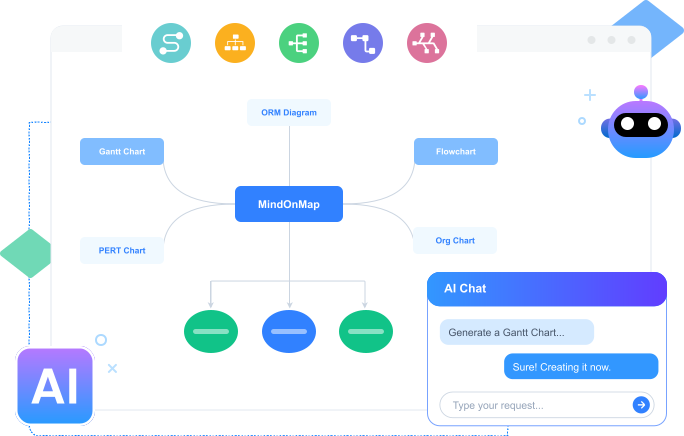
Do you want to visualize competitor insights? Then, you can access MindOnMap Flowchart Creator. When it comes to creating an exceptional visual representation, there is no doubt that this tool can offer everything you need. It includes:
Compare Competitors Side by Side
MindOnMap can also help you map out categories, such as features, pricing, marketing, and customer feedback. This tool helps you compare competitors side by side, allowing you to see all the information.
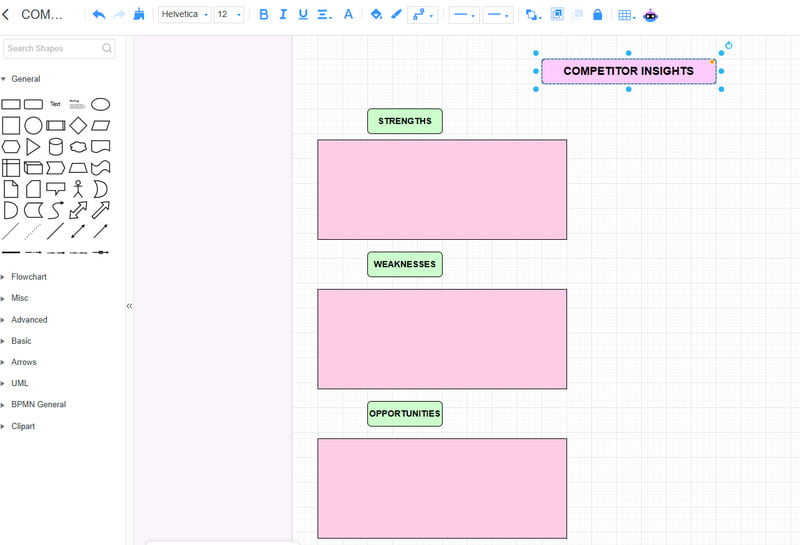
Mapping Strengths and Weaknesses
You can create a competitor profile template that also shows their strengths and weaknesses. This way, you can get an idea of where they excel and what their weaknesses are. A comprehensive visual can help you obtain insights into how you can make your business better than your competitors.
Identify Market Opportunities
Another good thing the tool can do is that you can identify market opportunities. You can spot opportunities for differentiation. This visualization makes it easier to align your tactics with areas where other businesses are underperforming.
What's more, MindOnMap can offer all the elements you need. You can access shapes, nodes, font styles, themes, and more, making it the best visualization tool for users. It can also be used for task analysis.
Secure Download
Secure Download
Part 6. FAQs about Competitor Analysis
What is the best software for a competitive analysis template?
If you want the best tool, you can access MindOnMap. This tool ensures that you can create an appealing template that you can use for inserting information about the competitors.
When do you need to conduct competitor analysis?
Competitor analysis should be updated regularly. It is to keep pace with market changes. It also ensures that strategies remain relevant.
What visualization tool can help with competitor analysis?
Some of the visualization tools you can use are SWOT analysis. This representation allows you to see the competitor's strengths, weaknesses, opportunities, and threats. It helps you gain more ideas on how you can make your business grow better.
Conclusion
Competitor analysis is a vital tool for businesses seeking to strengthen their market position and make informed strategic decisions. Thanks to this guide, you have learned everything about it, including direct and indirect analysis, the key factors to analyze competitors, and the method to conduct a competitive analysis. Plus, you have discovered MindOnMap as an ideal tool for analyzing competitor insights. Thus, you can rely on this tool to create a comprehensive visual representation.