What is the Role of the Project Manager [Latest 2026]
What does a project manager do? Simply put, they play a pivotal role in guiding teams. They even ensure that projects or tasks are completed successfully within the timeframe and budget. They are also responsible for planning, organizing, and overseeing projects while coordinating resources and managing risks. If you're looking to understand the core duties of a project manager, this guide covers everything you need to know. You will also get enough insights about the tool they use for organizing information. With that, start reading here and learn more.

- Part 1. Introduction to Project Management
- Part 2. Key Responsibilities of Project Managers
- Part 3. Skills Required for Project Managers
- Part 4. Tool Used by Project Managers
- Part 5. FAQs about What Does A Project Manager Do
Part 1. Introduction to Project Management
The discipline of arranging, planning, and supervising work to achieve a particular objective within a predetermined budget and timetable is called Project Management. It includes controlling risks, coordinating resources, and making sure that work is done properly and efficiently. Plus, project management gives teams direction and structure, keeping them focused on achieving effective results. This method is frequently utilized in many industries to turn concepts into reality while maintaining accountability and quality.
Who is and What is a Project Manager?
Think of a project manager as the conductor of an orchestra. They aren't playing every instrument, but they ensure everyone starts on time and stays in the same key. They act as the central figure who plans projects, arranges resources, and ensures that goals are met within the agreed scope, time, and budget. Aside from handling schedules and deliverables, a project manager also communicates with stakeholders, encourages teams, and resolves challenges to maintain projects on track. Lastly, a project manager is both a leader and a strategist. They ensure that complicated initiatives are executed successfully and deliver real value.
Why is the Role Important?
The role of a project manager is important since they give complicated projects structure, accountability, and direction. Teams may become distracted, deadlines are easily missed, and resources may be abused in the absence of a project manager. They ensure that projects remain in line with the company's objectives by arranging tasks, controlling risk, and maintaining open lines of communication with stakeholders.
Part 2. Key Responsibilities of Project Managers
After learning what the project manager does, maybe you want to explore more about their key responsibilities. In that case, you can check all the responsibilities in this section.
Planning
A project manager doesn't just 'make a schedule.' They architect the project's roadmap. This involves defining clear objectives and establishing the scope so the team doesn't suffer from 'scope creep' (where a project grows too large to manage). By identifying potential risks before the first task even begins, they set a foundation that minimizes surprises and keeps the budget intact.
Execution
Another responsibility they have is execution. In this phase, they lead the team in carrying out projects according to the plan, delegating tasks and clearing roadblocks to keep the momentum going. To keep the team motivated and make the project goals aligned, strong leadership and coordination are essential.
Monitoring
Think of the PM as the project's navigation system. They constantly track progress against the original plan, reviewing budgets and quality standards to ensure the project doesn't drift off course.
Communication
Among the responsibilities of the project manager is Communication. Clear communication is crucial for keeping stakeholders engaged and informed throughout the project. They act as the bridge between the team and stakeholders. They resolve conflicts, provide updates, and clarify expectations. Good communication can reduce misunderstanding, foster trust, and keep the team aligned with the project's vision.
Part 3. Skills Required for Project Managers
Stepping into project management requires a unique blend of soft and hard skills. It requires various skills to execute the role. With that, check this section and explore all the required skills for a project manager.
Leadership
Project managers must inspire and guide their teams, making decisions confidently and encouraging members to stay focused on objectives. Strong leadership ensures collaboration and accountability throughout the task.
Good Communication
Effective communication skills are necessary for a project manager. It is crucial to avoid misunderstanding and keep everyone aligned. They must convey updates, expectations, and feedback effectively across various channels.
Organization
Excellent organizing skills are necessary to manage several tasks, deadlines, and resources. Even with complicated projects, a project manager must prioritize tasks, organize workflows, and uphold order.
Problem-Solving
Having problem-solving skills is ideal for a project manager. Project managers must analyze issues quickly and develop effective and practical solutions. With this skill, a project manager helps to keep projects on track despite unexpected challenges.
Time Management
Knowing how to manage time is among the best skills a project manager must have. Balancing deadlines and workloads is necessary to ensure that tasks are finished within the timeframe. They must allocate time wisely and adjust plans when delays occur.
Part 4. Tool Used by Project Managers
To excel as a project manager, you need a robust system for visualizing your data. MindOnMap Flowchart Creator is a standout choice for this. With this tool, you can arrange all the information based on your preferences. You can use various shapes, connecting lines, arrows, font styles, and more. It also has a user interface, making it more suitable for all project managers. One of the standout features is the library of ready-to-use templates, which streamlines the way you organize project data. You can even save your final output in various formats, such as PDF, PNG, JPG, DOCX, SVG, and more. You can even access it on various platforms, such as Windows, Mac, browsers, and mobile devices.
To use this tool for organizing all the information, you can use the simple steps below.
Access MindOnMap on your desktop by clicking the Free Download buttons below. You can also use the online version.
Secure Download
Secure Download
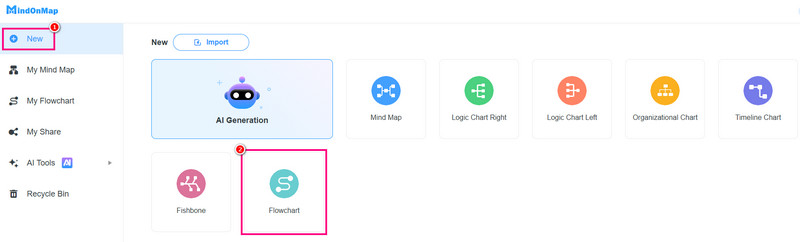
From the primary user interface, tap the New section. Then, choose and click the Flowchart feature to view the main interface.
Then, start organizing information. You can use shapes from the General section. To add the text, double-click the shapes.
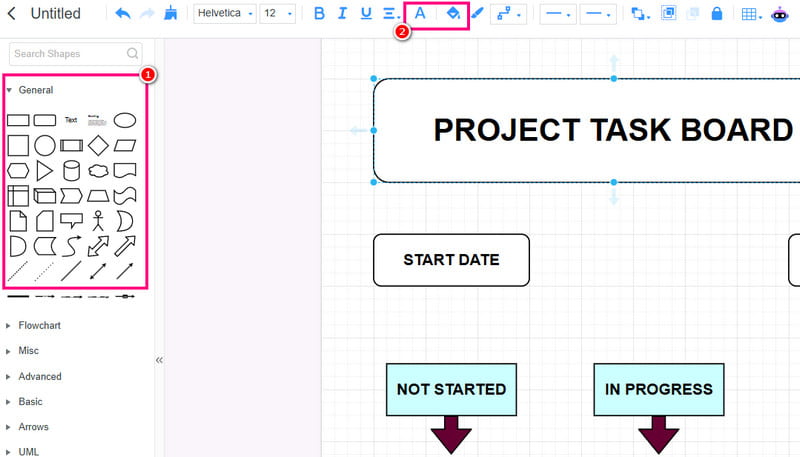
You can use the Font and Fill Color feature above to change the color of the shapes and fonts.
Finally, if you are done organizing the information, tap the Save button above. You can also use Export to save the diagram on your device.
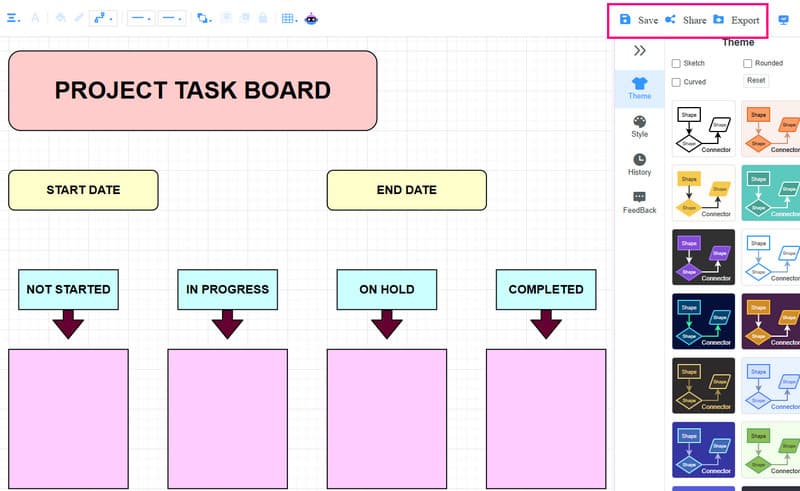
To share your work with other users, you can also rely on the Share feature.
Click here to see the entire diagram designed by MindOnMap.
Part 5. FAQs about What Does A Project Manager Do
Can project managers work in any industry?
Without a doubt, from tech and construction to healthcare and event planning, every industry relies on project managers to turn complex goals into reality. One effective approach they use is using Mindmaps for goal setting, which helps visually structure objectives, break down tasks, and ensure clear alignment throughout the entire project lifecycle.
Is being a project manager challenging?
Definitely, yes. A project manager is not a simple role. It needs various skills in maintaining the organization and accomplishing the objective.
How do project managers ensure success?
By ensuring that the tasks/projects are aligned with goals, managing risks, and fostering collaboration among stakeholders and team members.
Conclusion
You have now learned what a project manager does. You even explored their key responsibilities, importance, and required skills. Managing all these moving parts is nearly impossible without visual aid. That's where a tool like MindOnMap comes in. This tool ensures that you can insert all the information you need and create a better chart/diagram to make progress on track.