Mind Map for Escape Rooms: From Concept to Puzzle Design Made Easy
Escape rooms are full of surprises and challenges. That becomes possible because the planning of concepts and execution is properly done. Moreover, we all know that designing requires strong organizing skills, structuring ideas and challenges, and connecting clues seamlessly. That is why, in this post, we will learn how an escape room is planned using a mind map. Allow us to introduce you to the process with the use of a great tool. Let us start creating an escape room with a mind map like the one from the Squid Game layout.

- Part 1: What Is an Escape Room Game
- Part 2: How Mind Maps Help in Escape Room Design
- Part 3: Steps to Design an Escape Room
- Part 4: Design an Escape Room with MindOnMap
- FAQs about Escape Rooms with Mind Maps
Part 1: What Is an Escape Room Game
Let us now start this article by defining what an escape room game is. This is popular among people who love a live interactive adventure. In this game, players are locked in a themed room, and the only way to survive and be free is by solving puzzles, uncovering clues, and completing tasks within a set time limit.
All of the games included in the room are a combination of storytelling, teamwork, and problem-solving. Moreover, these games are most likely to revolve around mystery, fantasy, or thriller scenarios. Thus, people who love challenges can easily connect clues logically and work collaboratively under pressure. In conclusion, an escape room is both an entertaining and mentally stimulating experience for everyone who tries it.
Part 2: How Mind Maps Help in Escape Room Design
Using mind maps in designing an escape room is very essential in organizing the main ideas, structuring the puzzles, and allowing us to connect all the clues we want to include in the game. With all three of those main elements, mind maps indeed posses a capability to create an escape room with ease:
- • Organizing Ideas. Mind maps can easily help us arrange all the escape room concepts clearly. These can ensure themes, puzzles, and storylines are logically grouped. Overall, this can lead us to a smooth design execution.
- • Structuring Puzzles. Also, the mind maps can provide a visual framework that showcases the outline of a puzzle’s difficulty, sequence, and interconnections. These elements can make the entire challenge balanced and engaging for the players.
- • Connecting Clues. Mind maps link clues across different puzzles, allowing designers to create logical progressions that guide players naturally toward solving the final mystery.
Part 3: Steps to Design an Escape Room
Let us now talk about the general framework. Allow us to explain the universal process of designing an escape room in terms of storyline, puzzles, flow, and testing. With that, here is the conceptual and method‑oriented guide for you:
Step 1. Choose a Theme and Storyline
The first thing to do is decide on the escape room’s central concept. You can choose mystery, fantasy, thriller, etc. It is also great if you build a narrative that immerses players in the experience.
Step 2. Plan Objectives and Puzzles
Then, you should define what players must achieve and design puzzles that align with the storyline.
Step 3. Organize Clues and Flow
Next is to map how clues will connect to each other and sequence puzzles logically. It is also important that you ensure players progress smoothly without getting stuck too early in the game.
Step 4. Test and Refine the Room
Finally, you can also run trial sessions to spot unclear clues or overly complex puzzles. Then, based on your experience, you can adjust the layout and flow for a balanced, enjoyable challenge.
Part 4: Design an Escape Room with MindOnMap
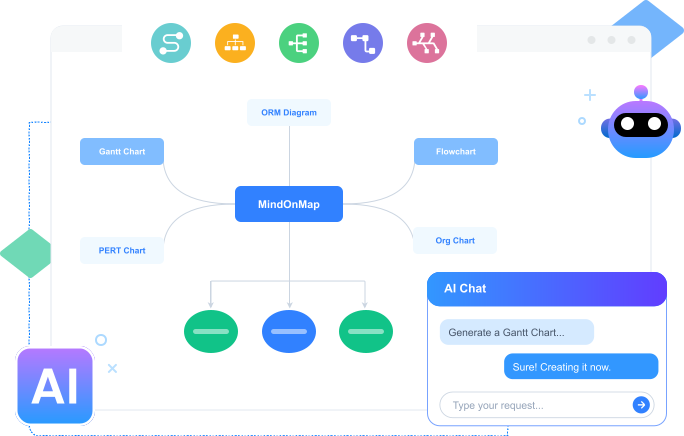
We already know everything about an escape room. From its definition to the general steps in starting the design and concept of it. From that, we shall now use a great mapping tool to use in order to execute the plan properly. Good things, MindOnMap Flowchart Maker is here to help us. This is a great tool that many users use to organize and plan a specific concept for their maps. Therefore, this tool will definitely be good for designing the whole concept of an escape room. All used to guide you from building storyline structure to visualizing puzzle flow, and to enhancing creativity. All of these capabilities will be possible with MindOnMap. Learn how to use this tool with ease:
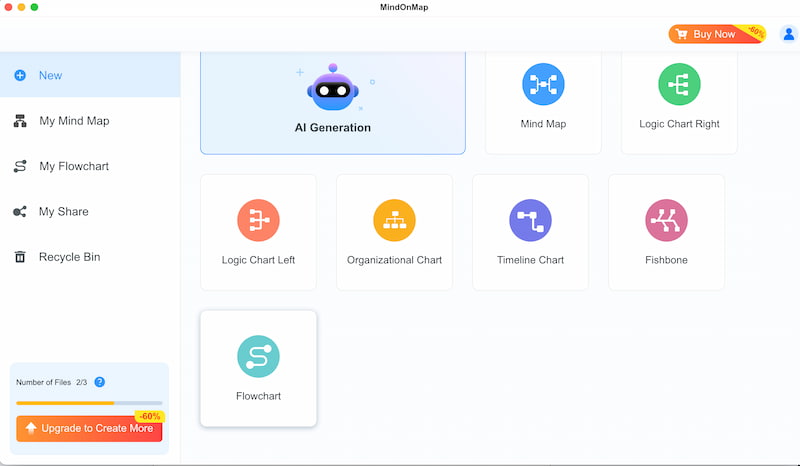
Step 1. Get MindOnMap from its official website now or install it on your computer for free. Then, open the tool to access the Flowchart feature that can help you start the mind map for your escape room.
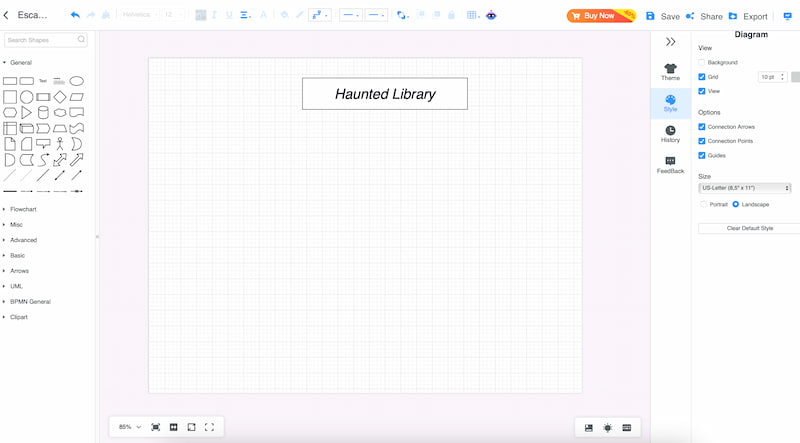
Step 2. After that, access the main editing interface of the tool. Let us now proceed to add your main idea or concept for the escape room.
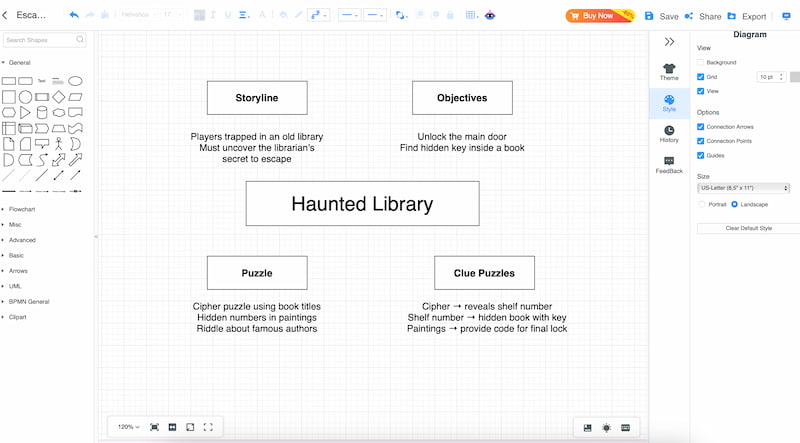
Step 3. From there, add Sub-topics that would connect each point. It is important that the sub-topics you add are anchored to your main topic.
Step 4. Add more design to the concept map by choosing the theme of your mind map. Then click Export to choose the
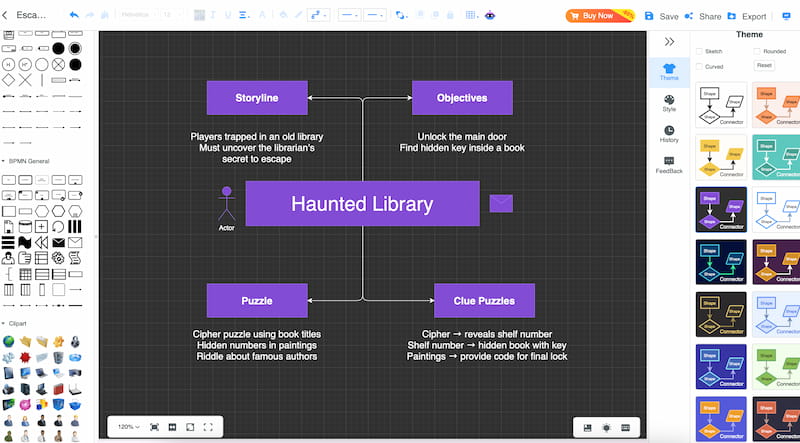
That’s how effective and simple it is to use MindOnMap. We can see that it possesses features that we can use for creating mind maps without complication. Therefore, planning your maps for escape rooms is now easy to do.
FAQs about Escape Rooms with Mind Maps
Q: Can beginners design escape rooms with mind maps?
A: Yes. Mind maps are simple to use for complex planning. That means even beginners can visualize storylines, puzzles, and clue flows using mind maps without feeling overwhelmed.
Q: How does MindOnMap improve escape room planning?
A: MindOnMap is a great tool that can provide an easy interface to build and edit mind maps. This can easily allow us designers to visualize the puzzle sequences and refine ideas step by step. This is a simple tool that you can use now for free.
Q: Do mind maps replace playtesting?
A: No. Mind maps organize the design. However, playtesting ensures puzzles are balanced, clues are clear, and the overall experience is fun for players. Therefore, Mind maps exist to help us organize all of the ideas so that when you start playtesting, you will find fewer aspects to improve.
Q: Can mind maps help with team collaboration?
A: Absolutely. Designers of the escape room can share mind maps with teammates, enabling collaboration for better teamwork. This makes it easier to brainstorm ideas, assign tasks, and refine puzzle sequences together.
Q: Are digital mind maps better than paper sketches?
A: Digital tools like MindOnMap allow quick edits, easy sharing, and clearer visualization compared to static paper sketches.
Conclusion
Let us now conclude this article by saying that escape rooms with mind maps are essential in setting the whole tone and mode of the game. We shall always start planning and organizing the concept first before anything else so that we can ensure a great execution of the game. Good thing, MindOnMap is here to offer its feature for creating an essential mind map for escape rooms. You can now use it for free!