Kotter's 8-Step Model: Everything You Need to Know
Want to dig deeper into Kotter's 8-Step Model? It is a widely recognized framework for leading organizational change. This model was also developed by John Kotter, a Harvard professor. The model provides a structured approach that helps leaders guide their members or teams through transformation by focusing on urgency, empowerment, vision, and communication. By using tools like a make-a-decision flowchart, leaders can visualize different change scenarios, evaluate possible actions, and make more informed decisions throughout the transformation process. So, if you want a detailed explanation of the discussion, especially the eight clear steps, start by reading this entire article.

- Part 1. What is Kotter's 8-Step Model
- Part 2. Why Kotter's 8-Step Model is Important
- Part 3. The 8 Steps in Kotter's Change Model
- Part 4. Common Challenges in Applying Kotter's Model
- Part 5. Use MindOnMap to Visualize the Change Management Process
- Part 6. FAQs about Kotter's 8-Steps Model
Part 1. What is Kotter's 8-Step Model
Kotter's 8-Step model for change is a framework designed by John Kotter. The model's main objective is to guide and help leaders and organizations successfully implement transformation. It also outlines eight sequential methods, starting with a sense of urgency and ending with anchoring new practices into the culture. Plus, the model focuses on leadership, communication, and employee involvement to reduce resistance and create momentum. By following the steps, an organization can navigate complex change more effectively and sustain long-term improvements.
Part 2. Why Kotter's 8-Step Model is Important
Do you know why Kotter's framework is important? Well, it is because the model provides organizations with a proven framework for managing change successfully. For more reasons why the model matters, see the information below.
Provide Clear Structure
The model simplifies complicated change into eight actionable steps. With that, it makes it easier for leaders to plan and execute transformation. Plus, this structured approach reduces confusion and ensures that all members understand the process.
Employee Engagement
By involving all the members in the change journey, the model helps reduce resistance and create ownership. When the member feels included, they are more likely to lend their hands, support, and sustain new initiatives.
Good Communication
The main focus is the importance of consistently communicating a clear vision throughout the business or organization. It motivates employees, ensures alignment, and keeps the momentum going during challenging transitions.
Sustainable Results
The last step of the model focuses on embedding changes into the organizational culture. This way, it will prevent regressions and ensure that improvements last after the initial implementation.
Part 3. The 8 Steps in Kotter's Change Model
The Kotter Model has eight steps. If you want to start exploring all of them, proceed to this section.
Create a Sense of Urgency
Change starts by making people aware of why it is important and urgent. It motivates them to act immediately and take the procedure seriously.
Building a Guiding Coalition
Strong team leaders and influencers are needed to support the change. Their credibility and collaboration help gain support across the organization. The coalition becomes the driving force that keeps the initiative moving forward.
Form a Strategic Vision
A good vision offers direction and purpose for the change. It helps employees understand what the future will look like and why it matters. Additionally, a good strategy outlines the steps needed to obtain that vision.
Communicate the Change Vision
In the next step in Kotter's model of change management, the vision must be communicated consistently and frequently across all levels. Effective communication ensures alignment and lessens confusion. The good thing here is that it inspires people to commit to the change.
Empower Broad-Based Action
The barriers to change, like resistant attitudes and outdated procedures, must be eliminated. Employees should be provided with the tools, authority to act, and training. The good part in empowering is that it encourages initiative and builds confidence.
Generate Short-Term Wins
Celebrating early successes is only a sign of progress. These wins can also boost morale and prove that change is achievable.
Consolidate Gains and Produce More Change
After the initial win, the leader must pursue bigger change. It will help the organization stay focused on avoiding a return to old habits. Building on momentum ensures that change or transformation continues to expand.
Anchor New Approach in the Culture
For the eighth process, new behaviors and practices must be incorporated into the organizational chart. It means embedding them into daily values and routines. Once the culture shifts, the changes become sustainable and permanent.
Part 4. Common Challenges in Applying Kotter's Model
When applying Kotter's 8-step change process, you might encounter some challenges. These are:
- • Organizations often underestimate how much communication is necessary to align all members.
- • Leaders sometimes struggle to convince members that change is necessary. Without real urgency, people may see the initiative as optional.
- • It might be hard to form a strong guiding team if the influencers lack trust in one another.
- • Some factors can block progress, such as outdated processes, structural issues, and resistant managers. If obstacles are not addressed, members might feel disengaged and powerless.
Part 5. Use MindOnMap to Visualize the Change Management Process
Are you looking for the best tool that can help you visualize the change management process? Then, we suggest using MindOnMap Flowchart Maker. This online mapping tool can assist teams in organizing ideas, processes, and responsibilities in a clear visual format. The tool is useful for change management since it allows leaders to break down Kotter's 8-Steps Model into a structured map that all members can follow. The best part is that it offers all the features you need, including shapes, lines, tables, colors, and more. Additionally, teams can use a project schedule to organize timelines, assign responsibilities, and monitor progress throughout each stage of the change management process.
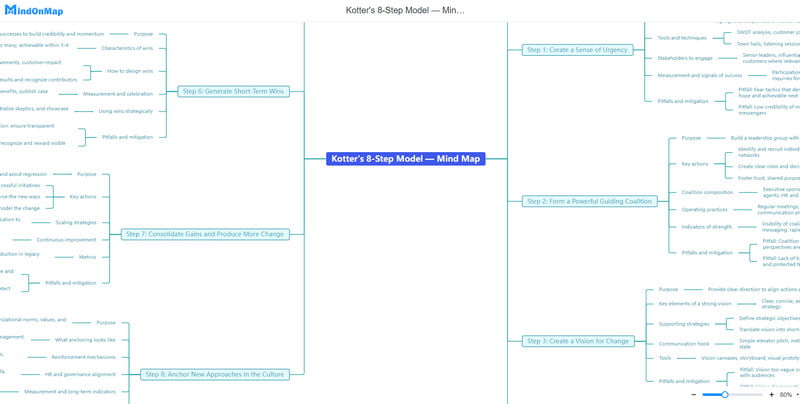
To learn how the tool supports the process, see the explanation below.
- • Map Each Change Stage – Leaders can show each step as a node, making the entire change journey easy to visualize and follow. This helps the members see the sequence and understand where they are in the process.
- • Clarify Leadership Responsibilities – Leaders’ roles can be assigned to specific branches. It shows who is responsible for communication, urgency, or anchoring culture. The good part here is that it prevents confusion and ensures accountability.
- • Track Implementation Progress – The best part about MindOnMap is that it helps leaders track the implementation process. It also allows teams to monitor achievements, track delays, and adjust strategies in real time if necessary.
You can click here to view Kotter's 8-Step Model, designed by MindOnMap.
Part 6. FAQs about Kotter's 8-Steps Model
Can Kotter's model be applied to any organization?
Definitely, yes. The approach/model is flexible and can be applied to businesses and even educational institutions. Well, the model's principles are universal since they focus on processes and people.
What are the biggest challenges in using Kotter's Model?
Some of the biggest challenges are creating genuine urgency, embedding change into culture, and building the right coalition. These challenges require strong leadership, persistence, and consistent communication.
Is Kotter's Model still relevant?
There is no doubt the model is relevant, as it focuses on leadership, communication, and culture. Even in changing industries, the model offers a framework for guiding transformation.
Conclusion
Now you have learned more about Kotter's 8-Step Model. You even learned each step, its importance, and the challenges involved in applying the model. Also, if you want to visualize the change management process, you can always rely on MindOnMap since it offers all the features you need. It lets you map each stage, track progress, and clarify responsibilities, making it the best tool for creating a well-structured visual representation.